Views: 0 Author: Site Editor Publish Time: 2026-11-26 Origin: Site


Automating genuine leather production presents unique challenges for modern manufacturers. You constantly deal with high material costs, irregular hide shapes, and unpredictable natural flaws. Scars, insect bites, and varying hide thicknesses complicate every single production run. Upgrading to a specialized Leather cutting machine is not just a simple speed enhancement. It serves as a critical yield-optimization and margin-protection strategy for your entire business. Every wasted inch of premium leather directly impacts your bottom line. Manual cutting processes are becoming increasingly unsustainable in competitive markets. This guide helps production managers and workshop owners evaluate available technologies confidently. We provide a vendor-neutral framework based on hard technical requirements. You will learn exactly how to choose the right equipment to scale throughput while minimizing expensive material waste.
Technology Match: CNC oscillating digital knives outperform lasers for genuine leather by eliminating burnt edges and toxic fumes.
Yield is King: Advanced nesting software paired with overhead projection or a CCD system is mandatory for maximizing hide utilization.
Workholding Matters: High-flow vacuum tables with configurable zones are critical to prevent shifting during high-speed tangential cuts.
Before evaluating machinery, you must define your current operational limits. Analyze your existing workflows carefully to understand your true needs.
Establish clear baselines for your current daily throughput. Count the number of hides your team processes manually each shift. Compare this baseline against your future target capacity. Scaling operations requires predictable, repeatable output that manual labor cannot guarantee.
Document the specific types of genuine leather entering your facility. Natural hides behave unpredictably under stress. Grain structure varies across a single hide. The spine region holds tight, dense fibers. The belly region features loose, stretchy fibers. Vegetable-tanned leather feels stiff and dense. Chrome-tanned hides are softer and stretch easily during handling. Heavy harness leather demands exceptional cutting force. Soft garment leather requires delicate edge treatment. Map these thickness ranges accurately before contacting vendors.
Define how automated equipment will fit into your existing workflows. Upgrading often means replacing expensive clicker presses and custom dies. You might eliminate manual pattern tracing completely. Perhaps you are upgrading from an entry-level drag knife setup. A modern CNC leather cutting machine must integrate seamlessly into your factory floor layout.
Set clear, quantifiable success indicators immediately. Ambiguous goals lead to poor purchasing decisions. Calculating return on investment requires looking beyond simple speed improvements. Factor in the reduction of manual labor hours. Consider the elimination of custom physical die costs, which degrade over time. Define exact targets for your team.
Achieve a 15% reduction in raw material waste.
Execute production cycles three times faster.
Eliminate edge-burn rejects entirely.
Hard metrics help you evaluate vendor performance claims objectively.
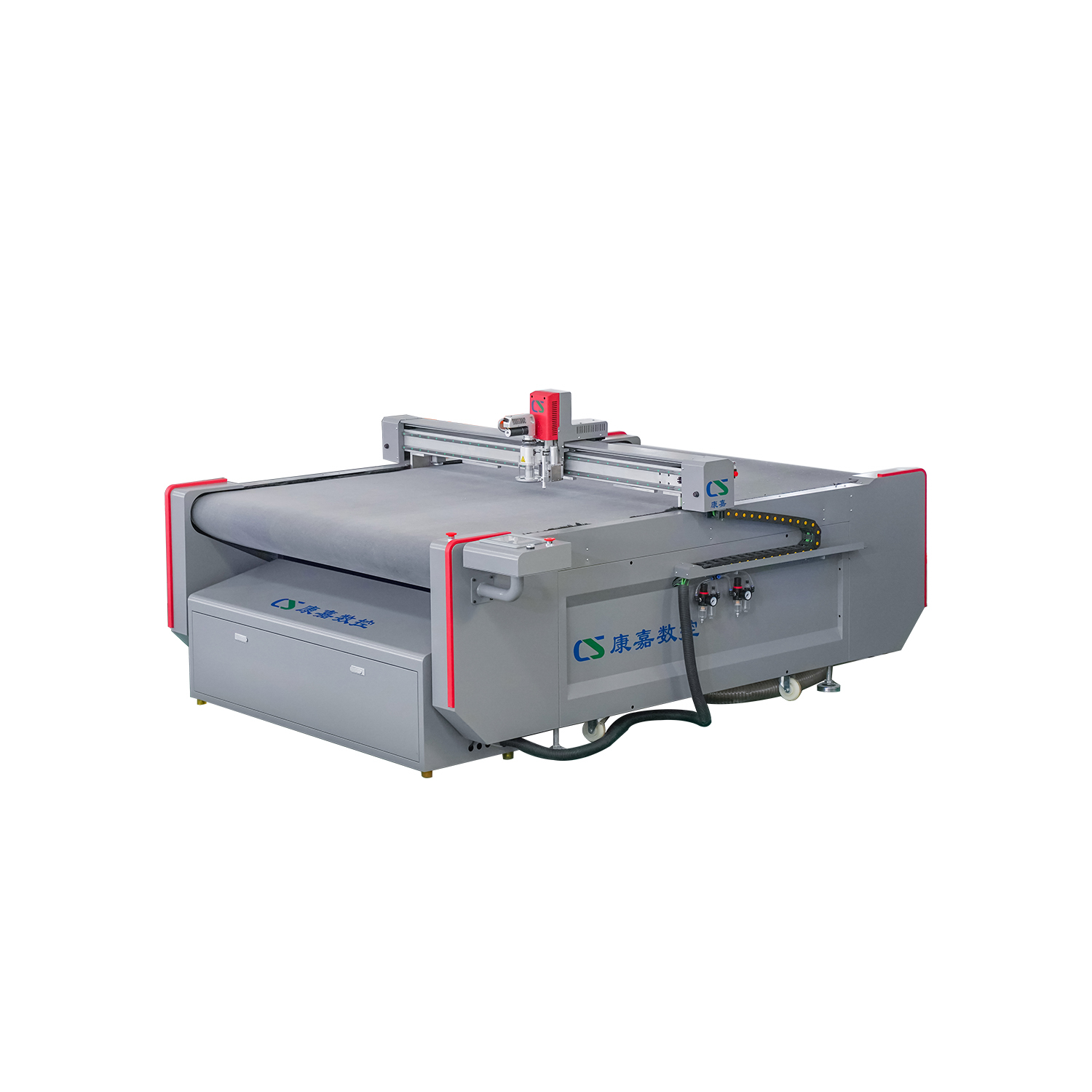
Manufacturers constantly debate optimal cutting methods. Genuine leather responds differently to various mechanical forces. Let us examine the three primary technologies available today.
Table 1: Cutting Technology Comparison
Technology | Edge Quality | Ideal Material | Primary Drawback |
|---|---|---|---|
CNC Oscillating Knife | Clean, burn-free | Thick, dense genuine hides | Requires consumable blade replacements |
Laser Machine | Charred, requires cleaning | Thin synthetics or fabric | Produces toxic fumes and burnt edges |
Drag Knife | Prone to corner tear-out | Vinyl and thin paper | Fails completely on dense natural leather |
This technology dominates professional leather workshops globally. An oscillating blade moves vertically at extremely high speeds. It slices through dense collagen fibers cleanly. Tangential control means the machine physically rotates the blade to face the exact direction of travel. This mechanical rotation prevents blade deflection. It leaves crisp, burn-free edges perfectly suitable for luxury goods. You can cut thick, dense leathers effortlessly. Cutting speeds remain exceptionally high across complex geometric patterns. However, this system has specific mechanical demands. You must replace consumable blades regularly to maintain edge quality. The mechanical cutting head features higher initial complexity compared to simple routers.
Lasers use focused light beams to vaporize material. They offer high precision for intricate internal cutouts. They exert zero mechanical force on the material. Unfortunately, lasers fail genuine leather applications frequently. They leave heavily charred edges behind. You must clean these burnt edges manually using edge paint or rigorous sanding. The intense heat creates toxic fumes from chemical tanning agents. Thin hides suffer a severe risk of heat distortion. Luxury brands strictly reject laser-cut leather due to the lingering burnt smell.
A drag knife simply pulls a trailing blade across the surface. Makers often implement this cheaply on basic CNC routers. It fails miserably on thick or dense genuine leather. The blade drags heavily and distorts the hide. You will experience severe corner tear-out on sharp turns. The blade cannot rotate actively during direction changes. This limitation renders drag knives entirely useless in industrial production environments.
Purchasing the right machine involves analyzing specific hardware features. Do not rely solely on basic speed specifications. You need components engineered specifically for natural hides.
Natural leather contains unavoidable flaws. Scars, brand marks, and weak belly areas compromise finished products. You must map and avoid these areas efficiently. A specialized CCD leather cutting machine solves this problem perfectly. It utilizes an overhead, high-resolution camera system. Leather graders mark flaws manually using fluorescent chalk. The camera scans hide perimeters instantly and recognizes these chalk marks. The software then dynamically updates the cutting path in real-time. This optical recognition prevents costly material waste automatically.
Maximizing material yield requires advanced software integration. Overhead projectors display nested parts directly onto the leather surface. Operators verify pattern placement visually before cutting begins. Evaluate the auto-nesting algorithms rigorously. Premium software automatically orients parts correctly. It aligns pieces according to the specific grain direction. It respects natural stretch lines inherent to animal hides. It places parts tightly while avoiding designated flaw zones. This automation saves hours of tedious manual layout time.
Genuine leather rarely lays perfectly flat on a table. Wrinkles and uneven thicknesses cause shifting during operations. You cannot use physical edge clamps effectively. Clamps waste valuable perimeter space and easily damage the hide. Multi-zone, high-horsepower vacuum tables solve this problem entirely. Modern systems utilize regenerative blowers to provide high-volume airflow. They pull air rapidly through a breathable felt cutting mat. They secure uneven genuine leather firmly from below. Configurable zones let operators concentrate suction precisely where needed. This mechanism prevents material movement during aggressive tangential cuts. Maintaining strong suction is vital when cutting small, intricate items like watch straps.
Your chosen leather cutting equipment should handle multiple tasks simultaneously. Check for multi-tool capacity on the primary gantry. The main oscillating blade handles standard profile cuts. Pneumatic punching tools create perfect stitching holes instantly. Routing pens add internal part numbers or alignment marks. This mechanical versatility streamlines your entire production sequence.
Transitioning to automated cutting involves significant operational shifts. You must prepare your physical facility and train your personnel thoroughly.
Industrial machinery demands specific environmental conditions. Address the physical footprint first. Leave ample clearance for material loading and offloading operations. These machines typically require three-phase power for stable servo operation. You will also need an industrial-grade air compressor. Pneumatic tool heads and vacuum pumps rely on consistent air pressure, usually around 0.6 to 0.8 MPa. Standard consumer compressors cannot handle continuous industrial demand.
Do not underestimate operator training requirements. Moving from manual cardboard patterns to CAD workflows takes considerable effort. Your team must learn advanced nesting software operation. They need to master DXF file preparation. Proper training is critical for maintaining high daily throughput. Ensure your vendor provides comprehensive, hands-on onboarding sessions.
Automated cutting heads require strict ongoing maintenance. Cutting blades wear out over time. Carbide blades last longer but carry higher replacement costs. High-speed steel blades are cheaper but dull rapidly. Felt cutting mats degrade after thousands of tool passes. You must replace them periodically to maintain clean material penetration. Routine spindle and drive lubrication prevents unexpected mechanical breakdowns.
Protect your business from restrictive vendor software practices. Some manufacturers enforce proprietary software architectures aggressively. They might charge recurring fees for basic nesting functions. They could force you to purchase expensive proprietary spare parts. Choose open-architecture systems whenever possible. Verify your ability to source standard cutting blades locally.
Selecting the best machine requires a highly structured approach. Follow these precise steps to evaluate vendors objectively.
Never trust vendor-supplied test materials blindly. They frequently use perfectly flat, optimized synthetic leather. Advise your purchasing team to demand live or video-recorded demonstrations. Send vendors your own most difficult genuine leather samples. Watch how their equipment handles your specific dense harness leather. Observe its performance on stretchy garment hides. This practical test reveals true mechanical capabilities.
Software usability dictates your daily production speed. Recommend trialing the nesting software interface personally. Evaluate the exact time required to import a DXF file. Time the process of marking material flaws digitally. Generate a complex cut path and review the overall nesting efficiency. Clunky software interfaces will bottleneck your expensive hardware constantly.
Unexpected machine downtime paralyzes production schedules. Evaluate vendor response times carefully before signing contracts. Check the availability of local service technicians in your region. Review the exact warranty coverage on critical electronic components. Servo motors and motherboards are notoriously expensive to replace. A strong Service Level Agreement protects your daily operations.
Build a clear framework for comparing different equipment manufacturers. Evaluate them based on required tolerances and production dependencies.
Tier 1 Legacy Brands: These European and US manufacturers offer extreme precision. They provide highly robust software suites. They suit environments where continuous production uptime is absolutely mandatory.
Tier 2 Asian Manufacturers: These brands provide excellent mechanical value. They deliver reliable cutting heads and standard features. They fit growing workshops balancing tighter budgets against necessary production tolerances.
The best machine ultimately solves your specific production challenges. It balances material yield optimization, edge quality, and daily throughput perfectly. You must prioritize your unique operational bottlenecks above flashy secondary features.
For genuine leather applications, an oscillating knife paired with projection systems clearly wins. This specific combination offers the highest verifiable return on investment. It entirely eliminates the burnt edges caused by lasers. It also solves the severe yield issues associated with manual cutting.
Take immediate action to upgrade your workflow. Finalize your exact material specifications today. Document your daily throughput goals clearly. Begin requesting custom cut-tests from your shortlisted top-tier vendors immediately.
A: A standard CNC cutter blindly follows a fixed digital path. CCD systems use high-resolution cameras to optically recognize material boundaries, printed patterns, or manually marked flaws. This allows the software to dynamically adjust the cut path in real-time, which is essential for maximizing yield on natural hides.
A: Yes, provided you configure the machine with a multi-tool head. This advanced setup includes pneumatic punching tools operating alongside the primary cutting blade. It allows you to cut intricate shapes and punch perfect stitching holes in a single automated pass.
A: A high-quality oscillating knife typically cuts genuine leather up to 15mm to 20mm thick. The exact limit depends on material density, blade length, and the cutting head's motor torque. This capacity easily handles heavy saddle, thick belt, or dense sole leather.
A: Most industrial machines readily accept standard vector files like DXF, PLT, or AI. You do not need specialized CAD design software. However, you do require specialized CAM and nesting software to translate those design files into optimized machine code and effectively manage flaw avoidance.
A: Lasers are highly unsuitable for finished genuine leather goods. They cause severe carbonization, leaving burnt, smelly edges that ruin the premium aesthetic. You will face excessive manual post-processing to clean these charred edges, negating any initial speed advantages the laser might provide.


