Views: 0 Author: Site Editor Publish Time: 2026-11-15 Origin: Site


Leather goods manufacturers face intense compounding pressures in today's global market. Skilled labor shortages, rising hourly wages, and the escalating cost of raw genuine leather squeeze factory margins daily. You must find innovative ways to produce more volume without spending more money. Traditional manual cutting forces a harsh tradeoff between sheer speed and maximum material yield. Scaling your output manually simply scales your waste and error rates proportionately. Factories quickly hit a production ceiling they cannot break through using human hands alone. Transitioning to an automated leather cutting machine solves this dilemma directly. It replaces highly variable human execution with predictable, data-driven production cycles. This comprehensive guide breaks down exactly how digital systems impact factory throughput. We also explore strict evaluation criteria for procurement and the daily implementation realities of adopting this powerful technology.
Automated nesting software increases genuine leather utilization by 5% to 15%, directly lowering unit costs.
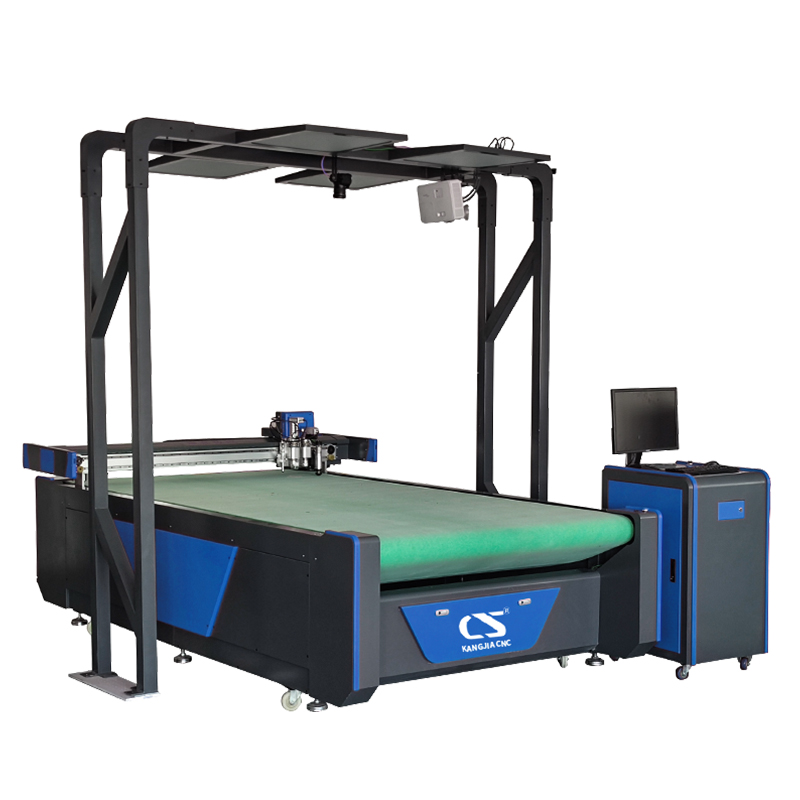
A CCD leather cutting machine utilizes overhead projection and scanning to bypass natural hide flaws without slowing down production.
Procurement evaluation should prioritize CAD software compatibility, vacuum table zoning capabilities, and tool-head versatility over raw cutting speed.
Successful implementation requires shifting factory roles from manual craftsmen to machine operators and digital pattern managers.
Relying heavily on highly skilled master cutters creates a hard ceiling on daily factory output. You simply cannot scale up your production lines overnight. Training new staff takes many months, which causes frustrating production lags. When senior cutters retire or leave the company, they take decades of tribal knowledge out the door. Factories remain highly vulnerable to local labor market fluctuations.
Human fatigue inevitably leads to suboptimal pattern placement across the work shift. Cutters naturally lose focus after standing for long hours. On premium genuine hides, even a tiny two percent drop in utilization severely impacts your profit margins. Every scrap of wasted material eats directly into the bottom line. What to watch out for: many factory owners severely underestimate their actual waste percentages. They often only measure final shipped products, ignoring the overflowing scrap bins entirely.
Manual knife variations also ruin final product consistency. Hand-cut edges often fray unevenly. Sizing discrepancies become a daily headache on the busy shop floor. These seemingly minor errors lead to massive downstream sewing bottlenecks. Stitchers struggle to align uneven pieces properly before sewing. This daily friction pushes factory rejection rates higher and delays final shipments to your valuable clients.
Automated production completely changes the traditional shop floor dynamic. Intelligent auto-nesting relies heavily on robust CAD integration. Software algorithms calculate the most efficient pattern layout in mere seconds. They maximize your hide yield based on exact part requirements. You completely eliminate the physical time operators spend arranging heavy cardboard templates. Best practice dictates running these nesting algorithms overnight for the next day's complex production batches.
Integrating a CCD leather cutting machine introduces highly advanced flaw recognition. Overhead industrial cameras scan raw hides instantly upon placement. They detect natural defects like deep scars, tick bites, and uneven grain structures. The system automatically adjusts the digital nest to avoid these flagged areas. It then projects the final layout directly onto the hide using bright lasers. The operator verifies this colored projection visually prior to actual cutting. This step ensures zero defective parts reach the final assembly stage.
Hardware capability matters just as much as digital software intelligence. High-frequency oscillating blades cut very cleanly. They slice through thick, multi-layered, or tough materials effortlessly. You avoid the nasty edge heat distortion often caused by industrial laser cutters. Meanwhile, heavily zoned vacuum tables hold the material rigidly in place. Strong, targeted suction prevents any shifting during high-speed directional changes. This incredible stability allows for precise, zero-buffer cutting between closely nested parts.
Different manufacturing sectors experience highly unique benefits when upgrading their technology. Success looks very different depending on your final product requirements. We can map out these specific industry advantages clearly below.
Sector Application and Output Gains Comparison
Manufacturing Sector | Key Requirement | Primary Output Gain |
|---|---|---|
Automotive Upholstery & Aviation | High precision for complex geometries and exact perforation hole alignment. | Eliminates manual flaw-checking and ensures strict symmetry for steering wheel covers and seat panels. |
Footwear Manufacturing | Rapid processing of graded sizes and symmetrical left/right pairs. | Drastically reduces pattern grading time; enables immediate switch-overs between shoe sizes without physical die-tooling. |
Luxury Bags & Luggage | Pristine edge quality on stiff, premium leathers to reduce edge-burnishing time. | Clean, perpendicular cuts speed up the final assembly and stitching phases. |
Automotive and aviation brands demand absolute perfection from their suppliers. A CNC leather cutting machine ensures critical perforation holes align exactly. You achieve perfect symmetry across large seating panels effortlessly. These strict industries rely heavily on verifiable quality control standards. Automated machines document every cut mathematically.
Footwear manufacturers face entirely different daily challenges. They must juggle dozens of graded shoe sizes simultaneously. Digital systems process symmetrical left and right pairs instantly. You can switch between a size seven and a size ten immediately. You no longer need to store, manage, or physically swap heavy metal cutting dies.
Luxury bag makers focus intensely on aesthetic finish quality. They process thick, stiff leathers daily. Clean machine cuts mean far less time spent burnishing rough edges by hand. The perpendicular blade actions speed up final assembly noticeably. Stitchers receive perfect pieces every time, which dramatically accelerates their daily output capacity.
Buying complex industrial equipment requires careful analysis of your specific needs. Do not fall into the common trap of evaluating basic metrics alone. You need intelligent machines tailored to your actual factory floor conditions. Consider these core dimensions carefully when shortlisting your potential vendors.
Features-to-Outcomes Matrix: Avoid judging a machine purely on raw top speed. Focus instead on effective throughput. Watch closely how fast the equipment processes complex curves and sharp corners. It must maintain perfect edge quality during these intricate maneuvers without tearing the delicate material.
Software Ecosystem Compatibility: The machine controller must seamlessly ingest standard industry file formats. Your system needs to read DXF, PLT, and AI files natively. Avoid equipment brands requiring tedious proprietary file conversions before every single production run.
Tooling Versatility: Look closely at modular tool heads during your initial evaluation. Your daily production needs will inevitably change over time. The ability to quickly swap between oscillating knives, rotary blades, punching tools, and marking pens is absolutely crucial. This flexibility directly dictates your capacity to handle future product lines.
After-Sales SLAs & Component Availability: Hardware eventually requires routine maintenance and unexpected repairs. Assess the vendor's guaranteed service response times critically. Verify if the machine uses standardized, commercially available parts like common servo motors and drivers. Proprietary components severely risk long-term supply chain lock-in and extended production downtime.
Choosing standard internal components protects your daily production schedule immensely. When a minor part eventually fails, you can source replacements locally. This smart engineering strategy minimizes downtime and keeps your assembly lines moving smoothly.
Purchasing leather cutting equipment solves many systemic problems, but it introduces entirely new workflows. Factories must prepare actively for a structured transitional period. Ignoring these physical implementation realities often leads to early frustration among your operational staff.
The Workflow Shift: Installing the physical hardware is only step one. Factories must completely digitize their entire physical pattern library. This massive transition requires significant upfront CAD labor before you can run production at scale safely. Consider hiring freelance digitizers to speed this phase up.
Operator Training Hurdles: Moving senior staff from manual cutting to software operation takes immense patience. Your team must overcome a noticeable digital learning curve. Expect a temporary two to four-week dip in expected output during this initial adoption phase. Plan your client production schedules accordingly.
Facility Requirements: High-performance machines demand highly specific physical environments. They require stable temperatures and robust three-phase electrical power connections. You also need heavy-duty industrial air compressors to power the vacuum hold-down systems reliably throughout the day.
Never underestimate the sheer importance of your facility's vacuum system. A common implementation mistake involves under-speccing the main vacuum pump to save upfront money. Weak suction inevitably results in material shifting mid-cut. This destroys expensive genuine hides and wastes valuable production time. Prepare your facility properly long before the installation crew arrives.
The initial capital expenditure for automated cutting systems is undeniably significant. However, the resulting predictable output fundamentally transforms your entire business model. Material savings and drastically reduced labor dependency create a highly verifiable path to return on investment. Mid-to-large factory operations typically see full financial returns within twelve to eighteen months.
Take these immediate next steps to begin your factory transition safely. First, audit your current genuine leather waste percentage accurately. Second, begin inventorying and organizing your physical pattern library for immediate digitization. Third, request a custom time-study from your top shortlisted equipment vendors. Finally, demand a live sample cut using your specific leather and DXF files to validate their bold yield claims.
A: Depending on regional labor costs and material volume, most commercial factories see full ROI in 12 to 24 months. This rapid financial return is driven primarily by a 5% to 15% reduction in genuine leather waste.
A: Yes, it processes both effortlessly. However, its highest value shines on genuine leather where natural flaws must be avoided. For synthetic leather, standard machines utilizing automated roll-feeders are often sufficient and much more cost-effective.
A: Routine maintenance includes daily cleaning of vacuum pores to ensure maximum suction strength. You must regularly lubricate the linear guide rails. Operators should also perform routine replacement of cutting blades and sacrificial mats to maintain high precision.
A: It replaces the heavy physical cutting labor directly. However, you still require a skilled human operator. Staff are needed to manage the software, load materials safely, and perform necessary quality checks on nested layouts.


