Views: 0 Author: Site Editor Publish Time: 2026-11-05 Origin: Site


Moving from manual or semi-automated cutting to full CNC technology represents a critical business threshold. Bottlenecks in the cutting room directly limit overall production scaling and margin health. When pattern execution stalls, the entire factory slows down. Misunderstanding how different CNC cutting mechanisms operate leads to misaligned procurement. This mismatch frequently results in burned edges on natural fibers, inaccurate pattern matching, or severe workflow blockages. Operators face unnecessary hurdles. Valuable materials go to waste. Fortunately, modern CNC solutions solve these issues efficiently. They rely on an intelligent combination of digital nesting, advanced material handling, and precise mechanical tooling. These integrated systems maximize both yield and speed across your production floor. You will learn exactly how these systems process digital files into physical garments. We will explore specialized tooling choices, automated feeding integrations, and crucial implementation realities.
Process Automation: CNC fabric cutters translate CAD designs into machine paths (G-code), using vacuum tables to secure flexible materials during the cut.
Tooling Matters: The choice between oscillating knives, straight knives, and laser heads depends entirely on the fabric composition (synthetic vs. natural) and ply depth.
Advanced Features: Modern workflows rely heavily on the integration of an automatic feeding fabric cutter for continuous rolls and a CCD camera cutting machine for precise alignment on printed textiles.
Decision Criteria: Evaluating a machine requires looking beyond top speed to assess nesting software efficiency, consumable costs, and integration with existing factory ERP/CAD systems.
Understanding the operational sequence helps identify where labor can be reduced and where software compatibility is non-negotiable. Many businesses focus entirely on the physical machine. However, the digital workflow preceding the cut dictates overall profitability. When you streamline this digital-to-physical transition, you minimize human error and drastically reduce material waste.
The cutting process begins long before a blade touches the fabric. Designers create patterns using Computer-Aided Design (CAD) software. They digitize these designs into universally readable formats like DXF. Once digitized, patterns move into specialized nesting software. Nesting represents one of the most critical Return on Investment (ROI) metrics for your factory.
Nesting algorithms act like a highly complex puzzle solver. They calculate the tightest possible pattern arrangement across a specific fabric width. This process minimizes fabric waste. Even a two percent increase in nesting efficiency can save thousands of dollars annually. A typical digital preparation sequence follows these specific steps:
Designers export 2D pattern shapes from fashion or industrial CAD programs.
Operators input the exact dimensions and roll width of the target textile.
The software automatically rotates and interlocks pieces to find the highest yield density.
The finalized layout is approved and locked for machine execution.
Fabric requires highly specialized hold-down mechanisms. Unlike rigid wood or metal, textiles stretch, shift, and wrinkle. Mechanical clamps cannot secure the center of a wide fabric roll. A specialized vacuum table solves this physical challenge perfectly.
The machine bed features a highly porous surface. Heavy-duty pumps pull air downward through this bed. This suction holds the flexible material entirely flat against the cutting surface. High-speed knife blades introduce significant drag forces during operation. If the material moves even a fraction of an inch, the pattern fails. Modern CNC beds utilize zoned vacuum technology. They apply suction dynamically only where the cutting head operates. This method prevents shifting, eliminates distortion, and conserves facility energy.
Once secured, the digital nest must translate into physical movement. The machine software converts the CAD patterns into G-code. This programming language dictates the exact speed, direction, and depth for the cutting head.
A robust gantry system drives this process. The gantry moves across the X and Y axes, while the cutting head adjusts along the Z-axis for depth. Advanced multi-axis movement ensures perfectly smooth curves and sharp corners. The gantry glides on high-precision rails, ensuring the physical cut matches the digital file within millimeters.
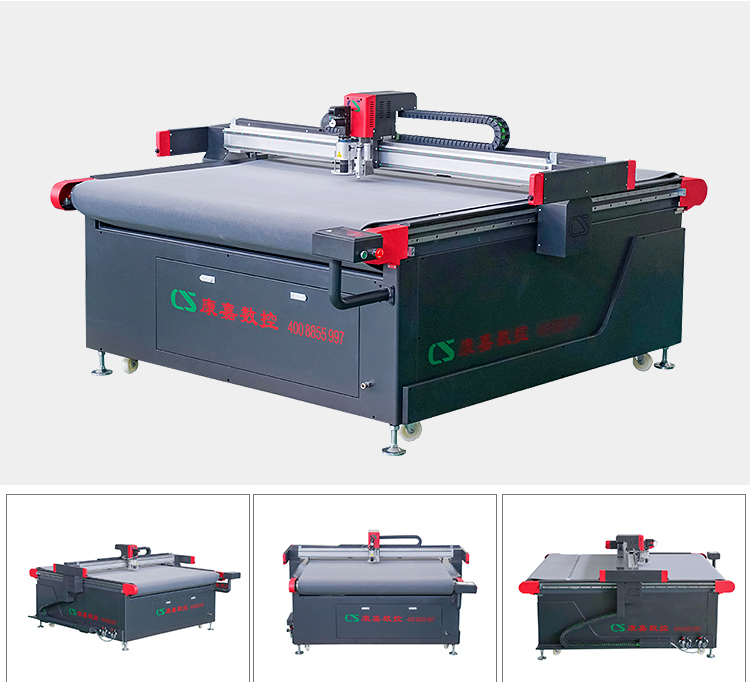
Selecting the wrong cutting mechanism causes immediate material damage. It can also invalidate manufacturer warranties. You must evaluate tooling based on your specific textile type and required ply-height. A tool designed for thick leather will destroy delicate silk. A tool meant for synthetics might ignite cotton. Understanding these distinctions protects your production quality.
Mechanical knife cutting remains the industry standard for most natural fibers and multi-layer stacks. Factories choose between several blade actions based on their daily volume.
Oscillating Knife: This tool utilizes a rapid up-and-down motion. It is best for single-ply or low-ply natural fibers, composites, and leather. The oscillating blade slices cleanly through tough fibers. It leaves absolutely no thermal damage or scorched edges.
Rotary Knife: A spinning circular blade designed for fast, straight cuts on single-ply fabrics. It struggles with intricate internal cutouts but excels at high-speed perimeter slicing.
Straight Knife: This robust tool is designed specifically for high-ply (bulk) cutting. Operators stack dozens of fabric layers together. The straight knife punches through the deep stack, cutting identical pieces simultaneously for mass production.
Laser technology replaces physical blades with concentrated thermal energy. These machines typically utilize CO2 lasers to vaporize the material directly along the toolpath.
Ideal Use Case: Lasers excel when cutting synthetic textiles like polyester and nylon. The heat automatically seals the edges as it cuts. This sealing effect permanently prevents fraying, which is crucial for sportswear and outdoor gear.
Limitation: Experts do not recommend lasers for natural fibers like cotton, wool, or silk. The thermal energy causes severe scorching and yellowing along the edge. Furthermore, cutting dry natural fibers with a laser introduces substantial fire risks into the factory environment.
Tool Type | Best Material Application | Ideal Ply Depth | Edge Finish Result |
|---|---|---|---|
Oscillating Knife | Cotton, Leather, Composites | Single to Low-Ply | Clean, no thermal damage |
Straight Knife | Uniform apparel fabrics | High-Ply (Bulk Stacked) | Clean, minor mechanical drag |
CO2 Laser | Polyester, Nylon, Synthetics | Single to Low-Ply | Sealed, prevents fraying |
A high-speed cutting head is useless if material loading creates a constant bottleneck. Your operators cannot manually unroll and align fabric fast enough to keep up with modern motors. Automation components dictate the true throughput of your fabric cutting machine. Scaling requires seamless material movement before and after the cut.
Transitioning from static tables to conveyorized systems transforms your daily output. An automatic feeding fabric cutter relies on a synchronized conveyor belt acting as the machine bed. This belt pairs directly with tension-free unrolling cradles located at the rear of the machine.
The unrolling cradle gently feeds the textile onto the conveyor. Built-in sensors monitor material tension. If the fabric pulls too tightly, the system adjusts the feed rate instantly. This mechanism prevents stretching before the cut. The business outcome is massive. It enables continuous, unattended cutting of rolled textiles. Operators no longer waste hours pulling fabric across long tables. This integration drastically reduces operator fatigue and nearly eliminates loading downtime.
Modern apparel often features complex dye-sublimated graphics. Cutting printed textiles requires perfect alignment between the digital graphic and the physical blade. A CCD camera cutting machine utilizes overhead or head-mounted vision systems to achieve this.
The high-resolution camera scans the fabric before the cut begins. It identifies printed registration marks or detects actual fabric contours. Fabrics naturally warp or shrink during the printing and pressing phases. The vision system recognizes this distortion. It communicates with the CNC software, automatically adjusting the toolpath in real-time to match the distorted print. This technology ensures perfectly aligned cuts for custom sportswear, banners, and patterned upholstery.
Shortlisting vendors requires evaluating overall equipment effectiveness and long-term operational efficiency, rather than just the initial sticker price. A cheaper machine often costs more if it fails to communicate with your current infrastructure. Decision-makers must focus on specific features and their direct business outcomes.
Software ecosystem: Proprietary nesting software must integrate seamlessly. Check if the machine accepts files from your existing CAD solutions like Gerber, Lectra, or Optitex. Forced software migrations cause massive production delays.
Multi-tool heads: Flexibility matters. Can the machine switch between a punch, a marking pen, and a knife in a single job? A multi-tool head allows you to cut patterns and mark sewing notches simultaneously, eliminating secondary manual steps.
Your business needs will evolve. Consider whether the equipment supports modular upgrades. Can a conveyor system or a vision camera be retrofitted later? Some machines require you to purchase all automation features upfront. Modular machines allow you to distribute capital investments as your production demands increase.
Industrial cutters pose distinct facility risks. You must evaluate the safety features carefully. Laser systems generate hazardous fumes when vaporizing synthetics. Check the specific exhaust and filtration requirements to maintain OSHA or local compliance. For mechanical setups, inspect the emergency stop mechanisms. High-speed knife blades must feature immediate fail-safes and light curtains to protect operators from accidental contact.
A transparent look at factory integration reveals what actually happens after the purchase order is signed. Buying the equipment is only the first milestone. Successful deployment requires careful attention to human factors and ongoing machine care.
Bringing CNC technology onto the floor shifts the required skill set. You move from manual labor to specialized machine operation. Your best manual cutter might not be your best CNC operator immediately. The operator must learn software troubleshooting, file management, and parameter adjustments. They must understand how to calibrate material tension and adjust vacuum zones. Comprehensive vendor training is absolutely non-negotiable for a smooth transition.
Industrial machinery consumes parts regularly. Factory managers must budget accurately for these ongoing needs.
Routine Replacements: Oscillating blades dull over time. The cutting underlay (the porous mats or conveyor belts) eventually absorbs too much damage and requires swapping. Laser tubes degrade naturally and lose power, requiring periodic replacement.
Preventative Maintenance: You cannot ignore the mechanical infrastructure. Vacuum pumps require filter changes to maintain suction power. Gantry rails need regular lubrication and cleaning to prevent fabric dust buildup. Neglecting these rails ruins cutting tolerances and leads to jagged pattern edges.
A CNC fabric cutting machine is not just a mechanized blade. It is a localized ecosystem of software, material handling, and precise mechanical cutting. When these elements synchronize, your factory dramatically increases throughput and minimizes waste. Understanding the distinct roles of nesting software, vacuum securement, and specialized tooling allows you to procure the right system for your specific textiles.
Before finalizing your vendor shortlist, take actionable steps to verify their claims. Request a live sample cut. Provide the vendor with your own most difficult fabric and your specific CAD files. This physical proof ensures the equipment handles your unique production demands effectively. Protect your investment by prioritizing software compatibility, operator training, and scalable automation features.
A: Yes, but with compromises. Machines equipped with straight knives handle bulk stacks easily. However, they lack the intricate detail capability of an oscillating knife working on single-ply fabric. Factories often utilize interchangeable tool heads or separate machines to maintain optimal quality across different ply depths.
A: A static table requires operators to stop the machine, physically pull the fabric, and realign it manually for every section. Conveyorized feeding allows continuous processing of rolled goods without stopping. This automated pulling eliminates manual handling, effectively doubling or tripling your daily output.
A: Optical recognition has limitations. Extremely dark or highly textured fabrics absorb light, making standard registration marks hard to read. Modern systems use high-contrast marks, but challenging fabrics may require specific specialized lighting adjustments or advanced edge-detection software to function properly.
A: You must plan for substantial clearance around the equipment. Beyond the cutting bed itself, you need space for unrolling cradles at the rear and offloading areas at the front. Commercial setups often require a physical footprint two to three times the size of the actual cutting table.


