Views: 0 Author: Site Editor Publish Time: 2026-07-01 Origin: Site


Traditional rotary-based machining often destroys non-rigid substrates. Spindles rely on high-speed friction and aggressive shear forces. They easily melt, fray, or shatter delicate components. A CNC Cutting Machine engineered specifically for soft materials solves this problem. It uses specialized knife technology instead of spinning router bits. These digital systems slice cleanly through pliable, compressible, and flexible goods.
Selecting the right equipment requires moving past basic spec sheets. You must understand tooling mechanics. You also need to carefully evaluate material hold-down methods. We recommend assessing long-term operational efficiencies rather than upfront price tags alone. We will explore how these advanced systems operate across various industries. You will learn how to match tool heads to specific substrates. We will also guide you through practical evaluation frameworks to ensure highly successful procurement.
Standard rotary CNCs rely on friction and shear, which often melt or tear soft materials; specialized machines use high-frequency oscillation to slice cleanly.
The core of a viable flexible material cutting machine is its tooling ecosystem (tangential knives, drag knives, oscillating blades) and a high-flow vacuum hold-down system.
Evaluating these machines requires focusing on material yield (nesting software efficiency), consumable blade costs, and exact material compatibility.
Procurement should always be preceded by a vendor proof-of-concept (POC) physical cut test.
Manufacturers often mistakenly attempt to route flexible materials using standard wood or metal CNCs. This approach creates immediate operational bottlenecks. Standard spindles rotate at high speeds. They generate intense friction upon contact. This friction transfers heat rapidly into the workpiece.
Heat transfer ruins many synthetic substrates. Spindles generate localized temperatures exceeding the melting points of soft plastics, rubbers, and foams. Melted material quickly sticks to the spinning bit. This ruins the edge finish and forces operators to discard the part. You also risk permanent damage to the expensive carbide router tooling.
Material distortion poses another major hurdle. Woven textiles and pliable polymers shift under heavy rotational forces. End-mills tend to snag loosely woven threads. This creates a "pulling" effect across the entire material bed. Even minor shifts destroy dimensional accuracy. You simply cannot maintain tight tolerances if the material moves mid-cut.
You must understand the fundamental tooling gap here. Subtractive routing works by making chips. It removes bulk material and leaves a wide kerf. Slicing parts material without any kerf loss. Knife-based systems part the substrate cleanly. They leave virtually no dust, require no chip extraction, and eliminate edge melting entirely.
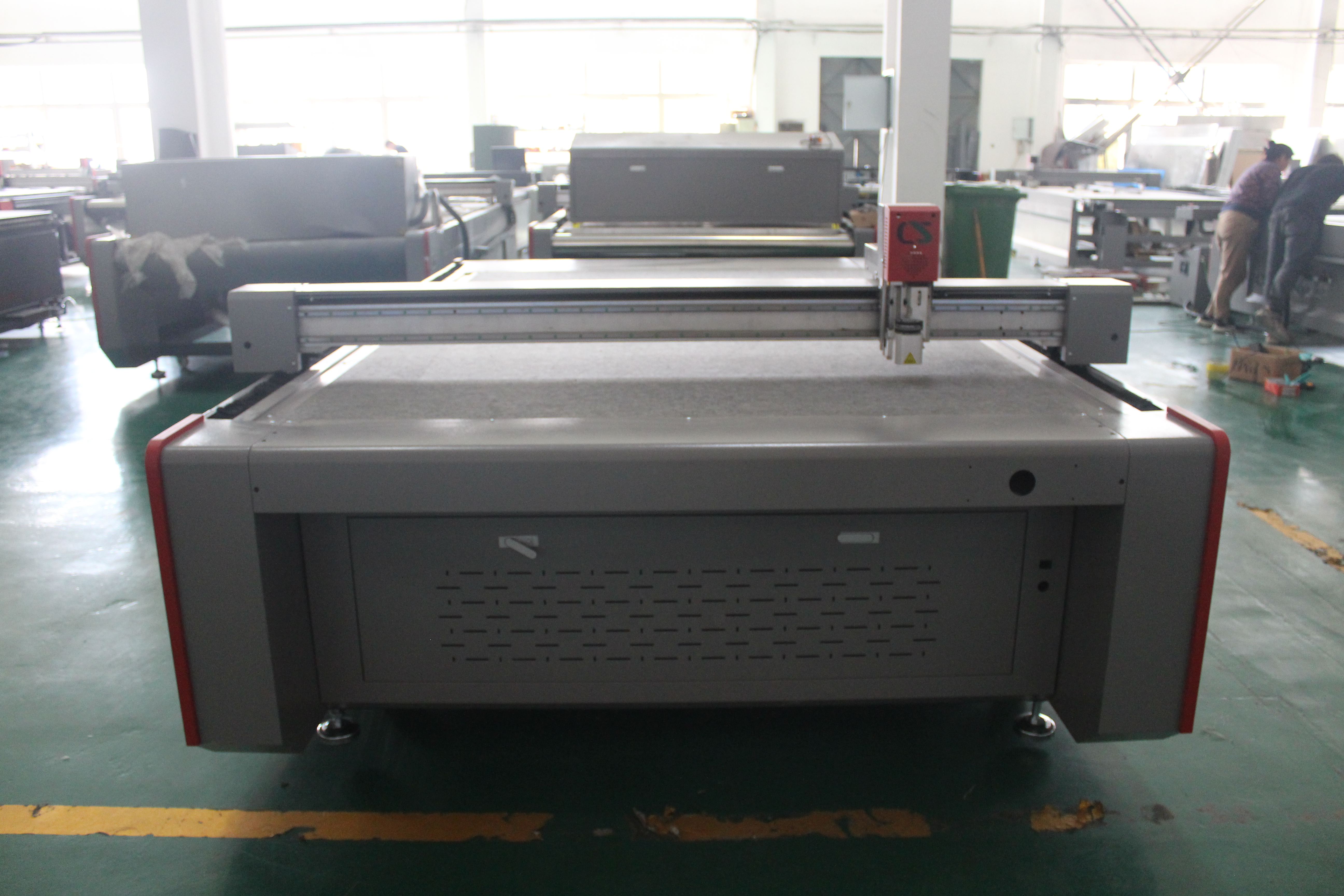
A true CNC Oscillating Knife Cutting Machine abandons the spindle entirely. It relies on a specialized digital cutting head paired with powerful material hold-down mechanisms. Understanding these core components helps you evaluate machine quality.
Digital cutters typically deploy two primary knife variations. You must select the right blade action for your specific payload.
Drag Knives: These blades remain static during movement. The machine literally drags the sharp edge through the substrate. They work exceptionally well for thin, dense materials like vinyl, thin leather, and paperboard.
Oscillating Knives: These blades feature a high-frequency up-and-down sawing motion. They stroke thousands of times per minute. This aggressive sawing action is essential for thick, compressible, or highly tough soft materials. It reduces lateral drag forces.
High-end units prioritize extreme versatility. A modular tool head allows operators to swap diverse implements quickly. You might need an oscillating knife for thick foam in the morning. By afternoon, you could require a rotary wheel blade for cutting unrolled fabrics. Advanced systems also accommodate punching tools for leather goods or creasing wheels for corrugated packaging.
Flexible goods lack structural rigidity. You cannot clamp them at the edges. A high-flow, multi-zone vacuum matrix serves as the only reliable hold-down method. Powerful pumps pull air down through a porous sacrificial mat. This creates intense downward pressure. Zoned tables allow operators to concentrate vacuum power specifically where the material lies. This prevents lightweight fabrics or porous foams from shifting under the blade.
Digital knife systems serve incredibly diverse industrial sectors. Identifying your exact material category ensures you procure the appropriate blade profiles. Below is a structured matrix outlining common Soft Material Cutting Applications.
Material Category | Typical Substrates | Primary Machining Challenge | Recommended Tooling |
|---|---|---|---|
Foams & Packaging | Polyurethane, EVA, Acoustic panels | Maintaining cut depth without edge tapering or crushing. | Pneumatic Oscillating Knife (Long Blade) |
Rubber & Gaskets | Neoprene, Silicone, EPDM sealing | Dimensional accuracy, preventing edge-melting under friction. | Electric Oscillating Knife |
Textiles & Composites | Carbon fiber (pre-preg), Kevlar, Upholstery | Preventing fraying, snagging, or thread-pulling. | Rotary Blade or High-Frequency Oscillating Knife |
Soft Plastics & Films | Thin PVC, Polycarbonate films | Avoiding the melting threshold typical of router bits. | Drag Knife or Kiss-Cut Tool |
Manufacturers frequently cut polyurethane and EVA foams for custom inserts. The primary goal is achieving uniform depth. High-frequency blades eliminate edge tapering completely. You achieve straight, ninety-degree sidewalls without compressing the foam structure.
Industrial gaskets demand flawless dimensional accuracy. Standard bits melt neoprene and silicone. A specialized digital cutter slices through these rubber compounds cleanly. This guarantees perfectly interlocking seals without rejected parts.
Aerospace and automotive sectors rely heavily on pre-preg carbon fiber and Kevlar. You cannot cut these industrial fabrics aggressively. Rotary blades prevent fraying. They part the composite threads cleanly before resin application.
Soft plastics face severe melting risks. Where a traditional router fails, a drag knife succeeds. It slices films flawlessly. Operators must respect practical limitations regarding material thickness. Thicker plastics eventually require specialized router-knife hybrid systems.
Selecting a highly capable Flexible Material Cutting Machine involves stringent operational checks. You must look beyond promotional materials. Focus instead on software integration, drive precision, and facility compliance.
You must decide between a dedicated knife cutter or a hybrid machine. Dedicated machines offer unmatched speed for pure textile or foam processing. Hybrid models include both a spindle and a knife head. They provide maximum versatility for shops handling both rigid woods and soft plastics. Evaluate your daily production ratio to justify the equipment investment.
Hardware only performs as well as its accompanying software. Evaluate the machine's CAM capabilities rigorously. Superior nesting algorithms auto-arrange part vectors to maximize sheet yield. Common-line cutting reduces blade travel time. High nesting efficiency dramatically lowers raw material waste. This directly boosts your daily profit margins.
Motion control determines edge quality. Entry-level machines use open-loop stepper motors. They can lose position during heavy cuts. Industrial systems utilize closed-loop servo motors. Servo drives constantly verify their exact position. They ensure tight tolerances when cutting interlocking soft components like custom packaging.
Modern production floors require strict safety protocols. High-speed knife machines move rapidly. We highly recommend specifying optical safety barriers. These light curtains instantly halt the machine if an operator breaches the work envelope. Dust and fume extraction systems remain vital, especially if you process fiberglass or pre-preg composites.
Many buyers underestimate the operational realities of adopting digital knife technology. You must acknowledge the distinct learning curves and facility upgrades required to run these systems optimally.
Blades wear out much faster than solid carbide router bits. Abrasive materials like glass-filled composites dull knife edges rapidly. You must continuously monitor cut quality to detect blade degradation. Factor the ongoing cost of tungsten carbide replacement blades into your monthly operational budget.
Vacuum hold-down systems demand substantial infrastructure. Pumps capable of holding down highly porous fabrics require significant 3-phase power. They also generate extreme noise levels. Facilities often measure pump output exceeding 85 decibels. You will likely need dedicated sound-dampening enclosures to protect your manual assembly teams.
Transitioning operators from standard routing to digital knife cutting requires specific training. G-code for routers focuses on feed rates and spindle RPM. Knife cutting requires managing material tension and blade overcut parameters. Operators must learn how to configure tangent angles to prevent tearing corners.
Ignoring sacrificial mat maintenance: A heavily scarred cutting mat bleeds vacuum pressure. This causes poor material hold-down.
Incorrect oscillation speeds: Running the knife too fast on thin materials causes excess vibration. Running it too slow on thick foam causes material tearing.
Bypassing the test cut: Never trust a standard specification sheet. Different fabric weaves react unpredictably under mechanical blades.
Standard rotary spindles destroy pliable substrates through aggressive friction. Digital knife systems eliminate this bottleneck entirely. Matching the tool head to exact material behavior remains the single point of failure in procurement. You must ensure your machine features a high-flow vacuum bed and closed-loop servo precision.
Follow these actionable next steps before signing any purchase orders:
Never purchase based on generalized equipment specifications alone.
Demand a live time-study from the vendor using your specific digital vectors.
Ship your actual raw material to the manufacturer for a proof-of-concept physical cut test.
Inspect the test parts closely for corner tearing, melted edges, or dimensional shrinkage.
Confirm your facility can support the high amperage and noise levels of industrial vacuum pumps.
A: Yes, you can install aftermarket tangential knife heads into a standard router collet. However, this remains a flawed stopgap. Standard routers lack zoned vacuum tables. Without proper vacuum hold-down, soft materials simply shift during the cutting process.
A: Lasers seal synthetic edges perfectly, making them excellent for nylon. However, lasers burn leather, char thick foams, and release highly toxic fumes when cutting PVC. CNC knives produce completely clean, fume-free, and unburnt cuts across all these problematic materials.
A: Friction causes soft plastics to melt and adhere to the blade. You prevent this by optimizing oscillation speeds to minimize heat buildup. We also recommend utilizing specialized blade coatings (like Titanium Nitride) and applying minimal dry lubrication mist during deep cuts.


