Views: 0 Author: Site Editor Publish Time: 2025-10-22 Origin: Site


In the world of leather cutting, precision and efficiency are paramount. Two popular technologies, oscillating knife and rotary knife cutting machines, offer distinct advantages tailored to different production needs. Oscillating knife machines excel in delivering intricate cuts on thicker materials, while rotary knife machines provide speed and smooth edges for thinner, delicate leather. This article will explore the key differences between these two cutting methods, their respective advantages, and how to choose the right machine for your leather cutting applications.
An oscillating knife cutting machine uses a blade that rapidly moves up and down to slice through materials. Unlike rotary knives that spin, the oscillating blade vibrates vertically at high frequencies—sometimes tens of thousands of strokes per minute. This motion allows the blade to cut precisely without generating heat or burning the material. The blade’s movement is guided by a computer numerical control (CNC) system, which directs its path for detailed and complex cuts.
The machine’s cutting table often uses vacuum suction to hold materials firmly in place during cutting. This combination of vertical blade oscillation and horizontal CNC movement enables clean, accurate cuts on flexible materials like leather.
Oscillating knife machines offer several benefits:
● Precision Cutting: The vertical vibration allows for very fine, clean cuts, ideal for detailed patterns.
● Material Integrity: Since the blade doesn’t rotate or generate heat, it minimizes damage, melting, or distortion of sensitive materials.
● Versatility: It can handle various flexible and semi-rigid materials, including leather, foam, rubber, textiles, and composites.
● Automation: CNC control automates cutting, increasing efficiency and repeatability.
● Material Savings: Thin blades and intelligent nesting software reduce waste by tightly nesting cut shapes.
These advantages make oscillating knife cutters popular in industries requiring high accuracy and delicate handling.
Oscillating knife cutting machines find applications across many sectors:
● Automotive: Cutting interior materials like leather seats, insulation, and gaskets.
● Apparel and Textiles: Precise cutting of fabrics and leather for clothing and accessories.
● Upholstery and Furniture: Cutting leather, fabric, and foam for cushions and coverings.
● Packaging: Die-less cutting of foam inserts, cardboard, and protective packaging.
● Signage and Display: Cutting vinyl, foamboard, and other display materials.
The machine’s ability to cut complex shapes accurately without damaging materials makes it essential in these industries.
When selecting an oscillating knife cutting machine, consider the types and thicknesses of leather you plan to cut to ensure the blade frequency and amplitude settings match your material needs.
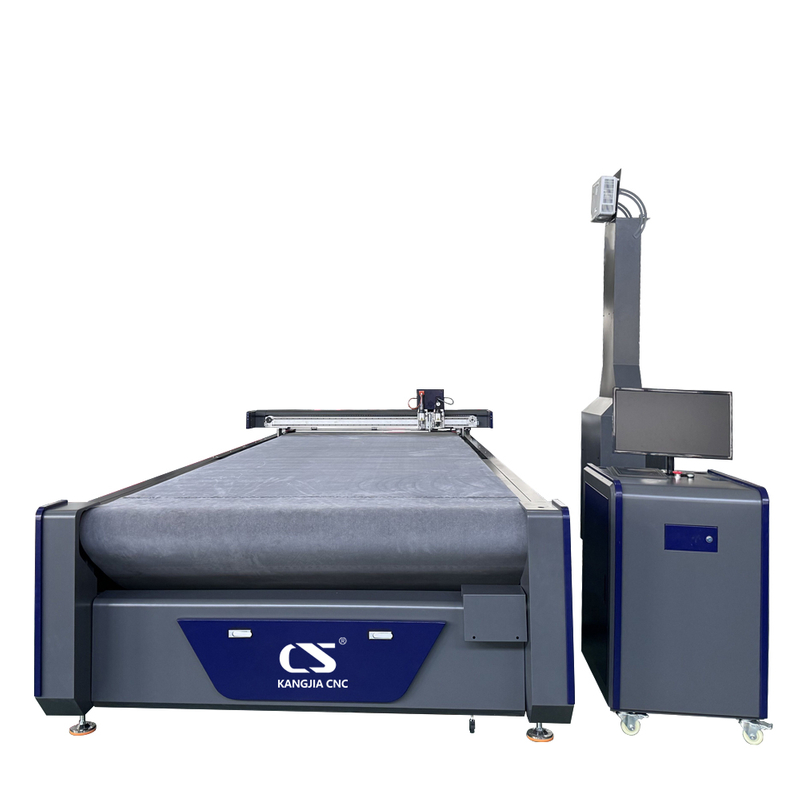
Rotary knife cutting machines use a blade that spins continuously to slice through materials. The rotary blade rotates at high speeds, driven by a motor, and moves horizontally over the material surface. The cutting path is controlled by a CNC (Computer Numerical Control) system, which guides the blade to follow precise patterns and shapes.
Unlike oscillating knives that move up and down, rotary knives rely on the sharp edge of the spinning blade to cut as it rolls across the material. This mechanism allows the blade to glide smoothly, especially over materials that are relatively thin and flexible. The cutting table often features vacuum suction to secure the material firmly, preventing slippage during cutting.
Rotary knife cutting machines offer several advantages:
● Smooth Cutting Motion: The continuous rotation reduces cutting resistance, enabling fast and consistent slicing.
● High Speed: Rotary knives typically operate faster than oscillating knives, improving throughput in high-volume production.
● Clean Edges: The rolling blade produces smooth edges, ideal for materials sensitive to tearing or distortion.
● Suitable for Thin Materials: Best for cutting air-permeable and delicate materials like fabrics and thin leather.
● Low Vibration: The rotary motion generates less vibration, which can extend machine life and reduce noise.
These benefits make rotary knife machines well-suited for industries where speed and clean edges on thin materials are crucial.
Rotary knife cutting machines are widely used in various sectors:
● Apparel and Fashion: Cutting fabrics and thin leather for clothing, accessories, and footwear.
● Automotive: Cutting thin upholstery materials and interior fabrics.
● Textiles: Fast cutting of woven and non-woven fabrics.
● Packaging: Cutting flexible packaging films and materials.
● Footwear: Precise cutting of shoe uppers and components from thin leather or synthetic materials.
Their ability to handle delicate, thin materials quickly makes rotary knives a popular choice in these industries.
When selecting a rotary knife cutting machine, consider the thickness and permeability of your leather to ensure optimal cutting speed and edge quality.
Oscillating knife cutting machines excel at delivering high precision. The blade moves up and down rapidly, slicing through leather cleanly without tearing or distorting the material. This vertical motion allows for fine control over the cutting depth and path, guided by CNC systems. The result is sharp, accurate edges even on complex patterns or thick leather layers. Because the blade doesn’t rotate, it generates minimal heat, preserving leather quality and preventing burn marks.
This precision is crucial when cutting detailed designs or multiple layers simultaneously. The oscillating knife’s ability to adjust stroke frequency and amplitude means it can be finely tuned to the specific leather type and thickness, ensuring consistent results across batches.
Rotary knife cutting machines use a spinning blade that rolls over the leather surface. This continuous rotation enables smooth, clean cuts, especially on thin, flexible leather. The rolling action reduces cutting resistance, which helps maintain edge quality and prevents snagging or pulling.
However, rotary knives may face challenges with thicker or tougher leather, as the blade must maintain sufficient sharpness and pressure to cut through without distortion. While very precise for simpler shapes and thinner materials, rotary knives might struggle with intricate patterns or multi-layer cutting compared to oscillating knives.
When it comes to speed, rotary knife machines generally have the edge. The continuous spinning blade glides quickly over leather, allowing faster cutting cycles. This speed advantage suits high-volume production where throughput is critical, especially for thin leather goods or fabric components.
Oscillating knives, while precise, typically operate at slightly slower speeds due to their vertical blade movement and the need for careful control to avoid material damage. Still, advances in servo motors and CNC controls have narrowed this gap significantly, enabling oscillating knives to achieve competitive speeds for many leather cutting tasks.
In summary, rotary knives offer faster cutting on thin, simple materials, while oscillating knives provide superior precision for thicker, detailed, or multi-layer leather cutting jobs. Choosing between them depends on your production priorities: speed or cutting detail.
For projects requiring intricate cuts or thicker leather, prioritize oscillating knife machines for their superior precision and material care, even if it means slightly slower speeds.
Oscillating knife cutting machines excel at slicing through a broad range of materials, especially those that are flexible or semi-rigid. They work great on leather, whether natural or synthetic, because the blade’s rapid up-and-down motion cuts cleanly without burning or tearing. This makes them ideal for thicker or multi-layered leather pieces often used in automotive interiors or upholstery.
Besides leather, these machines handle foam, rubber, textiles, cardboard, and composites well. Their ability to adjust stroke frequency and amplitude helps them adapt to different material densities and thicknesses. For example, they can cut dense leather or layered composites without crushing the material’s surface.
Rotary knife cutting machines are best suited for thinner, more delicate materials. The spinning blade glides smoothly over surfaces like thin leather, fabrics, and films. This makes them popular in apparel and footwear manufacturing where speed and smooth edges on thin leather are essential.
Because the rotary blade rolls rather than slices, it works well on air-permeable materials that might snag or tear with other cutting methods. However, it’s less effective on thick or multi-layer leather, as the blade might struggle to maintain clean cuts without dulling quickly.
When it comes to versatility, oscillating knives offer more flexibility across different leather types and thicknesses. They can handle everything from soft lambskin to thick cowhide and even multi-layered assemblies. The CNC control allows precise adjustments to blade speed and depth, optimizing cuts for each leather type.
Rotary knives, while faster on thin leathers, may require frequent blade changes or adjustments when switching between leather types or thicknesses. Their smooth rolling action favors thinner, more uniform materials but can be less forgiving on tougher or uneven leather surfaces.
In summary, oscillating knife machines provide broader material compatibility and versatility for leather cutting, especially when dealing with thicker or complex leather pieces. Rotary knives shine in high-speed cutting of thin, delicate leather but may fall short on heavier or multi-layered materials.
Match the cutting machine to your leather types—choose oscillating knives for thick or layered leather and rotary knives for thin, delicate leather to maximize cutting quality and efficiency.
Oscillating knife cutting machines often come with a higher initial price due to their complex mechanism and precision components. However, their cost efficiency shines over time. They reduce material waste by enabling tight nesting and precise cuts, which lowers raw material expenses. Additionally, these machines consume moderate energy since the blade vibrates rather than spins continuously, keeping power usage reasonable. Their automation features reduce labor costs by speeding up setup and cutting processes. Also, the ability to adjust blade frequency and amplitude helps optimize cutting for different leather types, minimizing blade wear and replacement frequency.
Rotary knife cutting machines typically have a moderate upfront cost. Their key advantage lies in fast cutting speeds, which boosts throughput and lowers labor costs per unit. They are energy-efficient as the rotary blade spins continuously but requires less force to cut thin, flexible leather. However, rotary blades can dull faster when cutting thicker or tougher leather, leading to more frequent blade replacements. Material waste may be slightly higher compared to oscillating knives because the blade’s rolling action needs more spacing between cut parts to prevent edge damage. Overall, rotary knives are cost-effective for high-volume runs of thin leather products.
Maintenance for oscillating knife machines centers on keeping the blade sharp and the oscillation mechanism clean and lubricated. The precision servo motors and CNC systems require regular calibration to maintain cutting accuracy. Vacuum systems also need routine checks to ensure proper material hold-down. When maintained well, these machines can last many years, offering consistent performance with minimal downtime.
Rotary knife machines demand regular blade sharpening or replacement due to continuous spinning wear. Bearings and motor components require lubrication and inspection to prevent failure. The simpler mechanical design often means easier and quicker maintenance tasks. However, if used on unsuitable materials, blade damage and motor strain can shorten machine lifespan.
In both cases, investing in preventive maintenance reduces unexpected breakdowns and extends equipment life, protecting your investment.
Schedule regular blade inspections and preventive maintenance to balance operational costs and maximize machine longevity for both oscillating and rotary knife cutting machines.
Oscillating knife cutting machines come equipped with several safety features to protect operators. Emergency stop buttons are standard, allowing immediate shutdown in case of a hazard. Safety light curtains or sensors detect if hands or objects enter the cutting zone, halting the machine automatically. The blade is enclosed in a guarded housing to minimize accidental contact. Additionally, many machines have anti-collision systems that stop the blade if unexpected resistance occurs, preventing damage and injury. Operators receive safety training emphasizing proper use, including avoiding entry into the cutting area during operation. These features create a safer workplace while maintaining productivity.
Rotary knife cutting machines also prioritize safety through multiple mechanisms. Their blades are often partially shielded to reduce exposure. Emergency stop systems are integrated for quick machine shutdown. Some models include safety interlocks that prevent blade movement unless guards are in place. Due to the continuous spinning motion, rotary knives may generate less vibration, reducing operator fatigue and risk of repetitive strain injuries. However, because the blade spins rapidly, strict protocols and protective gear are essential during maintenance or blade changes. Overall, rotary knife machines balance efficient cutting with operator safety through design and procedural controls.
Both oscillating and rotary knife cutting machines offer environmentally friendly advantages compared to thermal cutting methods like lasers. Oscillating knives cut cold, producing no smoke, fumes, or heat-affected zones, thus minimizing air pollution and material damage. Rotary knives also avoid heat generation, reducing energy consumption compared to laser cutters. Both machines support material-saving nesting software, which optimizes layout to reduce leather waste. Vacuum hold-down systems further ensure precise cuts, minimizing scrap. Additionally, many modern machines use energy-efficient motors and low-power standby modes. Choosing such machines contributes to sustainable manufacturing by lowering emissions, conserving materials, and reducing energy use.
Always verify that your chosen cutting machine includes essential safety features like emergency stops, blade guards, and sensors to protect operators and comply with workplace safety standards.
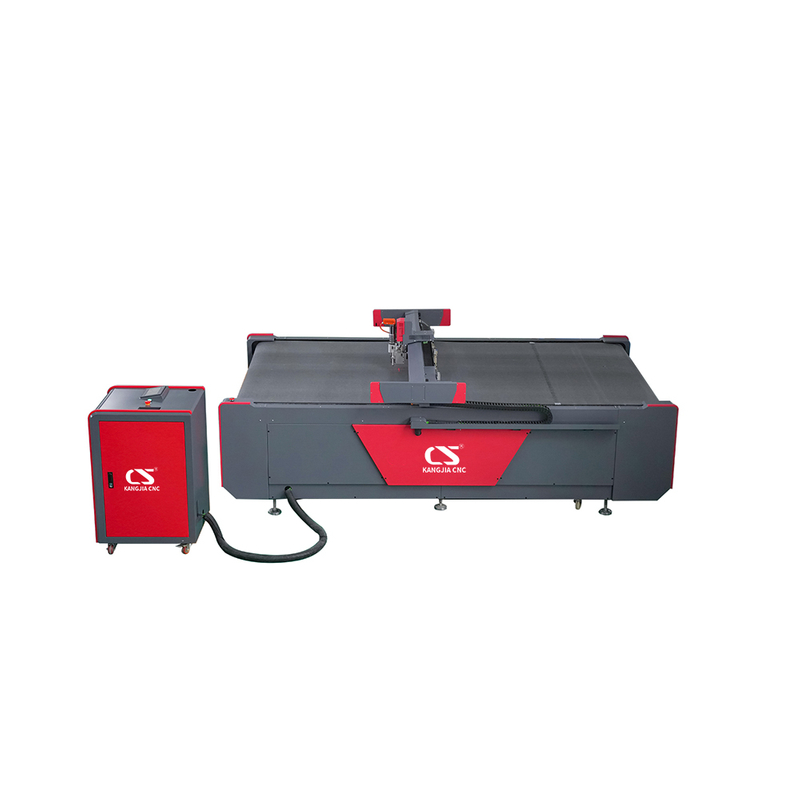
Choosing between an oscillating knife and a rotary knife cutting machine depends on several key factors:
● Material Type and Thickness: Consider the kind of leather you cut most often. Thick, dense leather or multi-layered materials suit oscillating knives better. Thin, delicate leather works well with rotary knives.
● Production Volume: High-volume, fast-paced production favors rotary knives due to their speed. For smaller batches or jobs requiring precision, oscillating knives may be preferable.
● Cutting Complexity: Intricate patterns or multi-layer cuts require the precision of oscillating knives. Rotary knives handle simpler shapes efficiently.
● Machine Size and Workspace: Evaluate your workshop space and the size of leather sheets or rolls you handle. Larger machines handle bigger materials but need more floor space.
● Budget and Total Cost of Ownership: Initial cost, maintenance, blade replacement, and energy use all factor in. Oscillating knives may cost more upfront but save on waste and blade wear. Rotary knives offer faster cutting but may need frequent blade changes.
● Software and Automation: Look for CNC control, nesting software, and integration with your production workflow. Automation reduces labor and increases repeatability.
● Safety Features: Ensure the machine includes safety stops, blade guards, and sensors to protect operators.
● Support and Service: Reliable technical support, availability of spare parts, and training resources help maintain uptime.
Match machine capabilities to your specific goals:
● If your priority is high precision and cutting various leather thicknesses, an oscillating knife machine is ideal. Its adjustable stroke frequency and amplitude allow fine-tuning for different materials.
● For speed and efficiency in cutting thin leather or fabric components, rotary knife machines excel. Their continuous blade rotation enables faster throughput.
● If your operation requires multi-layer cutting or complex shapes, oscillating knives provide better control and cleaner edges.
● For large-scale production with simple designs, rotary knives reduce cycle times and labor costs.
● Consider material savings: oscillating knives with intelligent nesting software minimize waste, which can improve margins.
● Factor in your long-term plans: machines with modular tool heads or upgrade paths offer flexibility as your product range evolves.
Leather cutting technology is advancing rapidly. Look out for:
● Increased Automation: Integration with robotic material handling and automated loading/unloading improves efficiency.
● Smart Software: AI-driven nesting and pattern recognition optimize material use and reduce setup times.
● Enhanced Vision Systems: Cameras for precise alignment on printed or irregular materials increase accuracy.
● Energy Efficiency: Machines with regenerative drives and low power consumption reduce environmental impact.
● Modular Tooling: Systems that switch between oscillating, rotary, drag knives, and creasing tools expand versatility.
● Remote Monitoring and Diagnostics: IoT-enabled machines allow predictive maintenance and reduce downtime.
Staying informed about these trends helps future-proof your investment and keeps your production competitive.
Before purchasing, conduct a thorough analysis of your leather types, production volume, and cutting complexity to select a machine that balances precision, speed, and cost for your specific needs.
Oscillating knife machines excel in precision, handling thick leather and intricate patterns, while rotary knives offer speed for thin materials. For complex designs, oscillating knives are recommended; rotary knives suit high-volume production. These technologies significantly impact the leather cutting industry by enhancing efficiency and reducing waste. Jinan Kangjia CNC Equipment Co., Ltd provides cutting-edge solutions, ensuring superior precision and speed, meeting diverse production needs with advanced automation and material-saving features. Their products deliver exceptional value, driving innovation in leather cutting.
A: Leather Cutting Machines are specialized tools used to cut leather into precise shapes and patterns, often using oscillating or rotary knife mechanisms.
A: Oscillating knife Leather Cutting Machines use a blade that rapidly vibrates up and down, guided by CNC systems, to cut leather without generating heat.
A: Rotary knife Leather Cutting Machines offer fast cutting speeds and smooth edges, ideal for thin, delicate leather materials.
A: Oscillating knife machines provide precise cuts, preserve material integrity, and are versatile for various leather types and thicknesses.
A: Consider the leather type, production volume, and cutting complexity to choose the machine that best meets your needs.


