Views: 0 Author: Site Editor Publish Time: 2026-07-31 Origin: Site


Sign makers face a specific production bottleneck daily. Cutting PVC and foam-core advertising boards manually creates massive inefficiencies. Using sub-optimal equipment leads directly to ragged edges. It melts heat-sensitive materials. It heavily bottlenecks your entire order fulfillment process. We designed this guide to help you overcome these hurdles. It provides a strictly technical and commercial framework. You will use it to evaluate CNC equipment for signage production. PVC presents very specific material challenges. It demands careful heat management. It generates aggressive static dust. The right machine configuration easily mitigates these issues. You will learn exactly how to match spindle speeds, tooling, and hold-down systems to your daily production needs.
Investing in a dedicated advertising board cutting machine shifts production from labor-intensive bottleneck to scalable output with predictable ROI.
The choice between a traditional CNC router and a CNC oscillating knife cutting machine depends strictly on material density (rigid PVC vs. soft KT boards).
High spindle speeds are the enemy of PVC; evaluating a machine requires looking at variable speed controls and robust hold-down vacuum systems.
Never use laser cutters for PVC due to the release of highly toxic, corrosive chlorine gas—CNC mechanical cutting is the only compliant and safe standard.
Manual cutting methods actively damage your bottom line. Track saws slip frequently. Utility knives wander off the intended cut line. These manual errors destroy expensive printed graphics. You lose valuable time reprinting damaged sections. An automated Advertising Board Cutting Machine eliminates these frustrations. It delivers exact dimensional accuracy every single time. It radically increases your daily production velocity.
Yield optimization presents another massive financial benefit. Blank 4x8 or 5x10 PVC sheets cost significant money. Nesting software analyzes your digital cut files intelligently. It packs various sign shapes tightly together on the virtual board. This process minimizes wasted material margins. You extract maximum revenue from every single sheet of plastic.
Labor reallocation provides massive returns for modern print shops. Skilled fabricators should never spend hours pushing a manual saw. They provide far more value elsewhere. Upgrading frees your team from repetitive tasks. They focus entirely on finishing procedures. They handle complex assembly tasks. They manage highly profitable onsite installations instead.
Upgrading also expands your core service capabilities dramatically. You can bring complex contour cuts in-house immediately. You stop rejecting custom shapes. You can easily produce striking 3D lettering. You handle mixed-material signage seamlessly. You keep all the profit margins without outsourcing specialized requests.
Common Mistake: Relying on manual labor for high-volume orders. This guarantees inconsistent edge quality and burns out your staff.
Best Practice: Implement an automated workflow. Send digital files directly from your RIP software to your CNC controller.
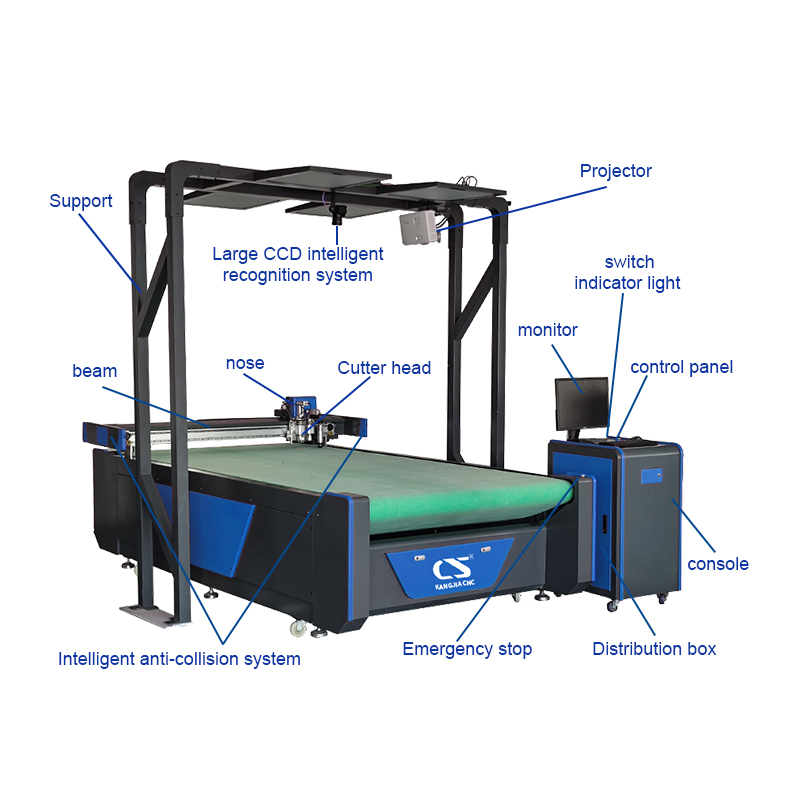
You must map your specific signage materials to the correct cutting technology. Purchasing the wrong tool guarantees ruined substrates. We use a precise framework to categorize these choices. Material density dictates your equipment needs.
Material Type | Examples | Ideal Cutting Technology | Primary Benefit |
|---|---|---|---|
Rigid Substrates | Hard PVC (Sintra), Acrylic, ACP, Solid Wood | Traditional CNC Router Spindle | Handles high-density resistance; allows pocketing. |
Semi-Rigid / Soft Substrates | Foam Board, Coroplast, Rubber, Vinyl, KT Boards | Oscillating Tangential Knife | Clean, dust-free slicing without tearing. |
Mixed Media | All of the above | Hybrid System (Spindle + Knife) | Ultimate versatility for diverse shop floors. |
Traditional routers excel when processing highly rigid substrates. They handle hard PVC panels flawlessly. They cut acrylic effortlessly. They process aluminum composite panels (ACP) and thick wood. A spinning router bit offers unique geometric capabilities. You can perform V-grooving for folding ACP. You can execute pocketing for inlay letters. You achieve deep contour cutting on thick plastics.
However, routers possess strict limitations. A rapidly spinning bit aggressively grabs material. It will easily cause severe tearing on very soft foam. It chips lightweight substrates rapidly. You cannot use a standard router bit on delicate KT boards.
Soft substrates demand a completely different approach. Foam boards require gentle slicing. Corrugated plastic requires downward pressure. A dedicated CNC Oscillating Knife Cutting Machine solves this flawlessly. It plunges a razor-sharp blade into the material. The blade rapidly oscillates up and down. It slices cleanly through the substrate. It creates zero dust. It generates zero heat. It leaves the delicate foam core completely intact.
Many modern shops operate as mixed-media environments. They require both capabilities. Manufacturers now offer hybrid solutions. These machines feature tandem cutting heads. A powerful router spindle sits alongside an oscillating tangential knife. The software switches between them automatically. This represents the ultimate solution for versatile advertising shops.
We must explicitly address a critical safety hazard. You must never use laser cutters for PVC signage. Lasers rely on extreme thermal energy. Burning PVC releases highly toxic chlorine gas. This gas immediately mixes with moisture in the air. It forms corrosive hydrochloric acid. This acid rapidly destroys your expensive machine optics. It corrodes metal gantry rails. Most importantly, it severely violates workplace respiratory safety protocols. Mechanical CNC cutting remains the only compliant standard.
Evaluating CNC equipment requires looking past the marketing brochures. You must inspect the specific mechanical components. We look closely at spindle control. We examine the hold-down systems. We review tool calibration features.
Evaluating the RPM range proves absolutely critical for plastics. Many entry-level spindles run too fast. High spindle speeds are the absolute enemy of PVC. Friction generates extreme heat rapidly. The plastic melts directly onto the router bit. It ruins the edge finish entirely. You need a spindle capable of running smoothly at lower RPMs. PVC requires high feed rates combined with lower rotational speeds. This combination chips the material away cleanly. It prevents the plastic from overheating.
Advertising boards are inherently lightweight. They are highly prone to aggressive vibration. They lift easily during fast profiling cuts. You cannot rely on manual clamps. A robust multi-zone phenolic vacuum table is non-negotiable. You must assess its zoning capabilities carefully. Good tables allow operators to isolate vacuum pressure. You concentrate the suction exactly where the board sits. This guarantees a perfectly flat surface. It ensures remarkably clean edge finishes.
Complex sign designs utilize multiple tools. A single PVC board might require deep drilling. It might need delicate V-carving for letters. It then requires a robust profile cut. Changing these tools manually wastes massive amounts of time. You must recalibrate the tool height every single time. An Automatic Tool Changer (ATC) solves this entirely. It holds multiple bits in a linear rack. The machine fetches the correct tool automatically. It measures the tool length using a fixed sensor. It resumes cutting immediately. ATCs drastically reduce your overall cycle times.
Your hardware holds no value without capable software. You must assess compatibility deeply. The machine controller must accept standard G-code seamlessly. It should integrate flawlessly into popular design platforms. Standard CAD/CAM software like Vectric or ArtCAM should output files directly. A versatile CNC Cutting Machine integrates into your existing digital workflow without friction.
Vision systems are equally vital. Modern workflows involve printing graphics first. You place the pre-printed PVC sign onto the CNC bed next. You must align the digital cut path to the physical print perfectly. Doing this manually invites disaster. You must utilize a CCD camera registration system. The camera physically scans printed registration marks. It rotates the digital cut file automatically. It stretches the toolpath to match minor print distortions. It guarantees perfectly aligned cuts every time.
First-time operators frequently experience frustrating failures. They ruin expensive PVC sheets quickly. The primary culprit is always improper heat management. You must master feeds, speeds, and tooling geometry. We follow strict technical realities to avoid material waste.
You must address heat evacuation actively. Heat must transfer into the plastic chips. It must not absorb into the solid board. It must not absorb into the metal router bit. We manage this through careful chip load calculations.
Decrease Spindle RPM: Drop your speed to 12,000 or 14,000 RPM. Avoid running at 24,000 RPM.
Increase Feed Rate: Push the machine faster through the material. Slow movements cause excessive rubbing. Rubbing causes instant melting.
Monitor Chip Size: Inspect the waste material. You want distinct, chunky plastic chips. You do not want fine, snowy dust. Dust indicates your bit is merely rubbing the surface.
Adjust Plunge Rates: Ramp your bit into the material slowly. Straight plunging creates localized heat pockets.
Proper tooling selection dictates your success entirely. Standard wood-cutting bits perform terribly on plastics. Wood bits feature upcut geometries designed for fibrous materials. They possess two or four flutes. These multiple flutes trap plastic chips easily. Trapped chips melt instantly inside the cut channel. You must evaluate bits engineered specifically for plastics.
Single-flute "O-flute" upcut bits represent the industry standard here. The single flute design provides a massive channel for waste removal. The O-flute geometry curls the plastic chip perfectly. It ejects the hot material upward forcefully. It clears the kerf instantly. This specific tooling geometry guarantees a smooth, glass-like edge finish on solid PVC.
Processing PVC creates an intense operational environment. Plastic chips carry incredibly strong static charges. They cling aggressively to everything. They coat the moving gantry. They stick inside the spindle collet. They build up on the linear guide tracks. This accumulation accelerates mechanical wear substantially. It ruins expensive bearings.
You must evaluate your dust extraction capabilities seriously. A high-CFM dust collector is strictly necessary. It pulls the hot chips away before they re-melt. Furthermore, you must employ anti-static measures. Ground your dust hoses properly. Copper-lined anti-static hoses dissipate the electrical charge safely. This keeps your machine tracks clean. It preserves your mechanical accuracy.
Bringing industrial CNC equipment into your facility requires careful logistical planning. You must evaluate your physical infrastructure. You must plan for operator development. You must anticipate recurring mechanical needs. Proper planning ensures a smooth installation process.
Industrial machines require robust utility connections. You must outline your electrical phasing capabilities immediately. Entry-level machines might run on single-phase power. Heavy-duty spindles demand true 3-phase power. Supplying incorrect voltage damages sensitive electronic components. You must map the exact floor footprint required. You need ample clearance around the machine. Operators need space to load heavy 4x8 panels safely.
Compressed air represents another vital utility. Automatic Tool Changers rely entirely on clean, dry pneumatic pressure. The release mechanisms require consistent PSI. Oscillating knife modules also utilize air pressure frequently. You must install moisture traps on your compressor lines. Water inside pneumatic cylinders destroys them rapidly.
Automated equipment requires intelligent operators. You must assess the learning curve realistically. CAM software takes dedicated time to master. Operators must learn how to generate efficient toolpaths. They must understand nesting algorithms. Machine operation itself requires hands-on practice. Operators learn how to zero the Z-axis safely. They learn how to recover from emergency stops.
You must highlight the importance of vendor-supplied training. Good manufacturers provide comprehensive onboarding sessions. They walk your team through daily operations. Robust technical support proves invaluable during the first three months. Fast troubleshooting assistance prevents massive production delays.
You must transparently list recurring mechanical needs. Machines consume specialized parts regularly. Planning for these items ensures smooth, uninterrupted operations. You will routinely purchase replacement blades for knife cutters. Tangential blades dull rapidly when slicing dense rubber or thick coroplast. You must replace them frequently to maintain clean slices.
Router collets also wear out. They lose their gripping force over time. A loose collet causes severe bit vibration. It shatters expensive tools instantly. Spoilboards require frequent resurfacing. You will routinely skim a millimeter off the MDF bed. This maintains a perfectly flat cutting zone. Vacuum pumps require basic maintenance too. You must clean the internal filters regularly. Clogged filters drop your suction power dramatically. Keep a strict schedule for these basic operational tasks.
Choosing the correct equipment streamlines your entire production facility. You must define your primary material mix clearly. If you process thick, rigid PVC exclusively, a high-power router spindle serves you best. If your workflow relies heavily on soft KT boards, an oscillating knife represents your ideal solution. Shops handling diverse materials require hybrid systems. You utilize both cutting technologies seamlessly.
Buying inadequate equipment causes hidden productivity losses. Cheap components fail under heavy commercial loads. Ruined materials destroy your profit margins. Unreliable machines guarantee frustrating downtime. You want a robust system engineered for your specific demands.
Always verify machine capabilities before purchasing. Request physical cut samples directly from the manufacturer. Send them your specific printed PVC boards. Ask them to perform contour cuts using CCD registration. Inspect the final edge quality personally. This practical verification confirms the machine meets your exact production standards.
A: A router bit often shreds the delicate foam core of a KT board. While possible, the results look highly unprofessional. A PVC Printed KT Board Cutter utilizing an oscillating tangential knife represents the professional standard. It slices through foam cores seamlessly. It delivers perfectly clean edges every single time.
A: You must manage heat effectively at the cut point. Use a single O-flute bit designed specifically for plastics. Decrease your spindle RPM significantly. Increase your feed rate to ensure you produce larger chips. Ensure aggressive dust extraction. Removing hot chips from the kerf prevents them from remelting.
A: Yes. If your shop workflow involves printing graphics on PVC or foam board first and cutting them out second, a CCD vision system is absolutely mandatory. The camera reads registration marks perfectly. It adjusts the toolpath dynamically. This perfectly aligns your contour cuts automatically.


