Views: 0 Author: Site Editor Publish Time: 2026-07-03 Origin: Site


CNC cutting is a computer-controlled manufacturing process used to cut materials into accurate shapes, sizes, and patterns. Instead of relying on manual cutting, a CNC Cutting Machine follows digital instructions created from design software, allowing manufacturers to produce repeatable parts with higher efficiency and fewer errors. In modern production, CNC cutting is closely related to CNC Machining, but it focuses especially on separating, trimming, shaping, or contour-cutting materials according to programmed paths.
For companies working with leather, fabric, foam, gaskets, packaging materials, and other flexible materials, a CNC Cutting Machine has become an essential production tool. It helps manufacturers move from manual templates and hand cutting to digital files, automatic feeding, intelligent nesting, and cleaner material processing. KJ CNC, for example, focuses on CNC cutting solutions for industries such as automotive interiors, garments, handbags, shoemaking, toys, leather products, advertising, packaging, and furniture.
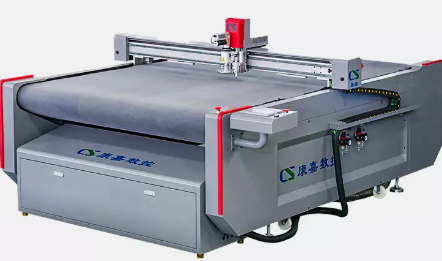
CNC cutting means using Computer Numerical Control technology to guide a machine tool along a planned cutting path. The process usually starts with a CAD file, then the design is converted through CAM software into machine-readable code such as G-code. The CNC Cutting Machine then follows that code to move the cutter, blade, laser, router, waterjet, or other cutting tool over the material.
In simple terms, a CNC Cutting Machine turns a digital design into a physical cut part. This is why CNC cutting is widely used in prototype production, custom manufacturing, and batch production. The process reduces dependence on manual skill, improves repeatability, and allows complex shapes to be cut more consistently than traditional hand methods.
CNC cutting is often discussed together with CNC Machining. CNC Machining is a broader manufacturing category that uses computer-controlled tools to remove material and create parts. It may include milling, turning, drilling, routing, grinding, and cutting. CNC cutting is one important branch of CNC Machining, especially when the goal is to cut sheets, rolls, panels, flexible materials, or flat stock into defined shapes.
A CNC Cutting Machine can be designed for many materials and cutting methods. Some machines are built for metal plates, while others are designed for soft materials such as leather, cloth, sponge, foam, PVC, rubber, composite materials, and packaging boards. For flexible material processing, an oscillating knife CNC Cutting Machine is often preferred because it performs cold cutting without burning the material.
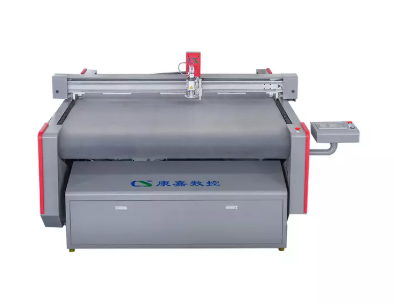
A CNC Cutting Machine works through a structured digital workflow. Although each machine type may differ, the basic process is similar across most CNC cutting systems.
Step | Process | Purpose |
1 | CAD design | Create the part shape, pattern, or cutting layout |
2 | CAM programming | Convert the design into tool paths and machine instructions |
3 | Material setup | Load, secure, and align the material on the cutting table |
4 | Tool selection | Choose the blade, knife, laser, router, or other cutting tool |
5 | Cutting operation | The CNC Cutting Machine follows the programmed path |
6 | Finishing and inspection | Check accuracy, edge quality, and final part consistency |
The key advantage is control. A CNC Cutting Machine does not guess the path. It follows programmed coordinates, feed rates, cutting speeds, and tool actions. This is especially useful when the same design must be produced many times or when a product includes curves, holes, slots, notches, or irregular contours.
For soft material manufacturers, the machine setup also includes material adsorption or feeding. Many flatbed CNC cutting systems use vacuum adsorption to hold fabric, leather, foam, or gasket sheets in place. KJ CNC lists vacuum adsorption, LED touch screen operation, integrated frame structure, safety protection, and tool head replacement as important machine features for its CNC Cutting Machine line.
CNC cutting and CNC Machining are closely connected, but they are not exactly the same.
CNC Machining usually refers to a broader subtractive manufacturing process. It can involve milling, turning, drilling, boring, grinding, and multi-axis machining. These methods are often used to create precise mechanical parts from metal, plastic, wood, or composite materials.
CNC cutting focuses more directly on cutting material into shapes. A CNC Cutting Machine may cut through sheet metal, fabric rolls, leather hides, foam boards, rubber sheets, acrylic panels, or gasket materials. In many industries, the CNC Cutting Machine is used before assembly, sewing, lamination, packaging, upholstery, or forming.
Comparison Item | CNC Cutting | CNC Machining |
Main purpose | Cut material into shapes or profiles | Remove material to create finished parts |
Common tools | Knife, laser, waterjet, plasma, router | Mill, lathe, drill, grinder, router |
Typical materials | Sheet, roll, panel, flexible stock | Blocks, bars, billets, plates |
Best for | Flat patterns, contours, soft material parts | Mechanical parts, cavities, threads, surfaces |
Output | Cut pieces, blanks, panels, patterns | Finished components or semi-finished parts |
A CNC Cutting Machine is therefore the right choice when the production goal is accurate cutting rather than deep material removal. For example, a leather goods factory may need a CNC Cutting Machine to cut handbag panels. A furniture manufacturer may need a CNC Cutting Machine to cut sofa leather, sponge, and upholstery fabric. A packaging plant may need a CNC Cutting Machine to process cartons, foam inserts, or protective materials.
Different industries use different CNC cutting processes. The right process depends on material type, thickness, edge requirements, speed, cost, and production volume.
CNC knife cutting uses blades instead of heat. The cutter may be an oscillating knife, vibrating knife, drag knife, pneumatic knife, round knife, bevel cutter, or punching tool. For soft and flexible materials, this is one of the most practical CNC Cutting Machine solutions.
A CNC Cutting Machine with an oscillating knife is suitable for leather, fabric, foam, sponge, EVA, rubber, gasket materials, carpet, cardboard, and composite soft materials. Because it is a cold cutting process, it can help avoid burnt edges, smoke, and strong odor. KJ CNC describes its cutting process as smokeless and odorless, with cold cutting that does not destroy the material being processed.
Laser cutting uses a focused laser beam to cut or engrave materials. A laser CNC Cutting Machine is commonly used for thin metal, acrylic, wood, textile, leather, and signage materials. CO2 lasers are often used for non-metal materials, while fiber lasers are commonly used for metal cutting.
A laser CNC Cutting Machine can deliver high speed and fine detail, but heat may affect some materials. For fabrics, leather, and foam, buyers should evaluate whether the material can tolerate thermal cutting. If burning, melting, hardening, or discoloration is a concern, an oscillating knife CNC Cutting Machine may be more suitable.
Waterjet cutting uses high-pressure water, often mixed with abrasive particles, to cut materials. A waterjet CNC Cutting Machine can process materials that are sensitive to heat, including certain composites, rubber, stone, glass, and metals. Since it does not rely on heat, it reduces thermal damage.
However, waterjet equipment can be slower and more expensive to operate than some other cutting processes. It is usually selected when the material is thick, hard, or unsuitable for laser cutting.
A CNC router uses rotating tools to cut, engrave, trim, or shape materials. It is widely used for wood, acrylic, plastic, foam board, composite panels, and signage. Compared with a knife-based CNC Cutting Machine, a router removes material as chips, so dust collection and tool wear must be considered.
Plasma cutting uses a high-temperature plasma arc to cut conductive metals. It is mainly used for steel, stainless steel, and aluminum plates. Plasma is not suitable for non-conductive flexible materials such as leather, fabric, or foam. For KJ CNC’s soft material market, plasma cutting is generally not the main direction.
A CNC Cutting Machine can cut a wide range of materials, but the correct machine type depends heavily on the material category. One reference source notes that CNC cutting can process plastics, rubber, foam, acrylic, and composite materials using different CNC technologies. For soft material manufacturing, the most relevant materials include:
Material | Recommended CNC Cutting Machine Type | Common Use |
Genuine leather | Oscillating knife, CCD leather cutter | Shoes, bags, upholstery, leather goods |
PU leather | Oscillating knife, laser depending on edge needs | Furniture, automotive interiors, handbags |
Fabric | Fabric CNC Cutting Machine, auto-feeding knife cutter | Garments, textiles, upholstery |
Sponge and foam | Knife cutting machine, foam cutter | Packaging inserts, furniture, cushions |
EVA | Knife CNC Cutting Machine | Mats, shoes, protective pads |
Rubber and gasket sheets | Oscillating knife, pneumatic knife | Seals, gaskets, industrial parts |
Cardboard and carton | Knife cutting, creasing, V-cut | Packaging samples, carton boxes |
Composite soft materials | Knife cutter, round knife, punching tool | Automotive, sports, insulation, flooring |
KJ CNC’s product categories include leather cutting machines, fabric cutting machines, sponge cutting machines, apparel cutting machines, CNC oscillating knife cutting machines, cutting machine accessories, and laser cutting machines. This product structure shows that its CNC Cutting Machine solutions are mainly built around flexible material processing rather than heavy metal machining.
A CNC Cutting Machine helps manufacturers improve production in several measurable ways.
First, it improves accuracy. KJ CNC lists cutting accuracy with error within 0.1 mm for its technology advantage, which is important for industries where pattern fit, material alignment, and repeatability matter.
Second, it improves repeatability. Once a file is programmed, the CNC Cutting Machine can repeat the same cutting path across multiple pieces. This is useful for garment panels, leather shoe uppers, automotive mats, foam packaging inserts, and gasket parts.
Third, it reduces labor dependence. Manual cutting requires experienced operators and physical templates. A CNC Cutting Machine allows operators to manage digital files, machine setup, feeding, and inspection instead of cutting every part by hand.
Fourth, it supports material saving. Nesting software can arrange parts more efficiently on sheets, rolls, or hides. This is especially valuable for expensive materials such as genuine leather, technical fabrics, and composite materials. Intelligent nesting is now a major trend in CNC cutting because manufacturers want better material utilization and lower waste.
Fifth, it supports flexible production. A CNC Cutting Machine can switch between different files without making physical dies. This is helpful for small-batch customization, sample development, quick order changes, and multi-product workshops.
A CNC Cutting Machine is used in many industries because it can handle both standard shapes and customized patterns.
Automotive interior production often requires accurate cutting of floor mats, seat covers, insulation materials, leather panels, composite pads, and trunk mats. A CNC Cutting Machine helps maintain consistent fitting dimensions and supports complex contour cutting. KJ CNC lists automotive interiors as one of the industries covered by its equipment and application solutions.
Leather production often faces material defects, irregular hide shapes, and expensive raw material costs. A CNC Cutting Machine with CCD recognition can help identify outlines and support more accurate leather cutting. For shoes, handbags, belts, wallets, and upholstery parts, digital cutting reduces the need for manual templates and improves pattern repeatability.
A fabric CNC Cutting Machine is widely used in clothing, home textiles, furniture fabric, curtains, and upholstery. Auto-feeding systems are especially useful when cutting rolled materials. A CNC Cutting Machine can help garment factories process digital patterns, shorten sampling time, and support frequent style changes.
Packaging production often involves cardboard, corrugated board, foam, EVA, and protective inserts. A CNC Cutting Machine can cut, crease, punch, and shape packaging samples without making dies. This is valuable for sample development, short-run packaging, and custom protective packaging.
Furniture manufacturers use CNC cutting for sofa leather, fabric panels, sponge, foam, and composite upholstery materials. A CNC Cutting Machine can improve cutting consistency across batches and reduce waste during furniture production.
Rubber, graphite, foam, and gasket sheets often require precise inner holes, outer profiles, and custom shapes. A CNC Cutting Machine can produce gasket samples or batches without mold costs, which is useful for engineering, maintenance, and industrial sealing applications.
CNC cutting is moving toward smarter, cleaner, and more flexible production. Several trends are especially relevant to buyers searching for a CNC Cutting Machine today.
Material cost is one of the biggest concerns in cutting operations. Intelligent nesting software arranges parts to improve yield and reduce scrap. This is especially important for leather, fabric, foam, gasket, and packaging materials. For roll-fed production, nesting must also consider fabric direction, grain, defects, and pattern alignment.
CCD camera recognition is becoming more important in leather cutting, printed fabric cutting, and label cutting. A CNC Cutting Machine with CCD recognition can help identify printed marks, material edges, or leather defects before cutting. KJ CNC lists large CCD intelligent recognition and edge cutting among its technology advantages.
Manufacturers increasingly want one CNC Cutting Machine to perform multiple tasks. Interchangeable tools such as vibrating knife, circular knife, pneumatic knife, bevel cutter, V punch, round punch, and marking tools allow one machine to cut, punch, crease, and mark different materials. KJ CNC highlights tool head replacement and multiple cutter head options in its CNC cutting machine description.
For soft materials, environmental and workplace requirements are pushing more manufacturers toward clean cutting. A knife-based CNC Cutting Machine can avoid smoke, odor, and thermal edge damage when compared with heat-based cutting methods. This matters for leather, fabric, foam, rubber, and some composite materials.
Many factories are buying their first CNC Cutting Machine, so ease of operation matters. English manuals, guide videos, online support, and service response help reduce training pressure. KJ CNC states that it provides manual and guide video support, online technical support, door-to-door service, and a standard 12-month warranty.
Choosing a CNC Cutting Machine should start with the material, not the machine model. A buyer should prepare clear production details before asking for a recommendation.
Key questions include:
1. What materials will be cut?
2. What is the maximum original material size?
3. What is the material thickness?
4. Is the material supplied in sheets, rolls, or irregular hides?
5. Does the material require cold cutting?
6. Is automatic feeding needed?
7. Is CCD recognition needed?
8. Are punching, creasing, bevel cutting, or marking required?
9. What level of cutting accuracy is required?
10. Is the machine for sampling, small-batch production, or continuous production?
KJ CNC also asks customers to provide material type, largest original material size, and material thickness before recommending a suitable cutting machine. This is a practical approach because one CNC Cutting Machine configuration may be ideal for leather, while another may be better for fabric, foam, or carton packaging.
Application | Best Machine Direction | Why It Fits |
Leather bags and shoes | CCD oscillating knife CNC Cutting Machine | Handles irregular leather and supports precise contour cutting |
Garment production | Auto-feeding fabric CNC Cutting Machine | Suitable for roll materials and repeated pattern cutting |
Foam packaging | Sponge or foam CNC Cutting Machine | Cuts cushioning shapes without expensive molds |
Gasket production | Oscillating or pneumatic knife CNC Cutting Machine | Handles rubber, graphite, and sealing sheets |
Carton samples | Knife cutting with creasing tool | Supports short-run packaging and sample making |
Automotive mats | Flatbed CNC Cutting Machine | Useful for large contours and custom fit parts |
Printed materials | CCD-guided CNC Cutting Machine | Recognizes graphics, marks, and cutting edges |
This comparison shows why there is no single universal CNC Cutting Machine for every factory. The best choice depends on material behavior, production mode, edge quality, tool configuration, and automation requirements.
CNC cutting matters because manufacturing is becoming more digital, more customized, and more cost-sensitive. A factory that still depends entirely on manual cutting may struggle with labor shortages, inconsistent output, slow sampling, and high material waste. A CNC Cutting Machine helps connect digital design with physical production.
For companies producing leather goods, apparel, automotive interiors, packaging, furniture, or industrial gaskets, a CNC Cutting Machine can shorten the path from design to finished part. It supports CAD files, repeatable cutting paths, nesting optimization, tool changes, and cleaner production. Compared with traditional manual methods, this makes the workflow more predictable.
CNC Machining will continue to be important for metal and mechanical parts, but CNC cutting is especially valuable for flat, flexible, and sheet-based materials. As demand grows for small-batch customization, faster delivery, and cleaner workshops, the CNC Cutting Machine will remain a core investment for many factories.
CNC cutting is a digital manufacturing process that uses computer-controlled equipment to cut materials accurately and repeatedly. It is part of the broader CNC Machining field, but its main focus is profile cutting, contour cutting, pattern cutting, and material separation. A CNC Cutting Machine can use different cutting methods, including knife cutting, laser cutting, router cutting, waterjet cutting, and plasma cutting.
For flexible materials such as leather, fabric, foam, sponge, EVA, rubber, gasket sheets, and packaging boards, an oscillating knife CNC Cutting Machine offers strong practical value. It supports cold cutting, automatic feeding, nesting, CCD recognition, interchangeable tools, and cleaner production. When selecting a CNC Cutting Machine, manufacturers should focus on material type, thickness, size, production volume, tool requirements, and after-sales support.
A well-matched CNC Cutting Machine is not only a cutting tool. It is a digital production system that helps factories improve accuracy, reduce waste, shorten lead time, and respond faster to changing customer orders.
Yes. A CNC Cutting Machine can be used for sample development because it does not require physical dies. It can also support batch production when paired with automatic feeding, nesting software, and the correct cutting tool.
A knife-based CNC Cutting Machine can cut leather through cold cutting, so it does not create the same heat-affected edge as laser cutting. This makes it suitable for many leather goods, footwear, upholstery, and automotive interior applications.
Most CNC cutting workflows start with digital design files created in CAD software. The file is then converted into machine instructions through CAM software. Common formats depend on the machine and software system, so buyers should confirm file compatibility before production.
Automatic feeding helps move roll materials onto the cutting table continuously. For fabric production, this reduces manual loading time, improves workflow efficiency, and supports longer cutting jobs with better consistency.
Before buying a CNC Cutting Machine, check your material type, maximum material size, thickness, cutting accuracy requirement, feeding method, tool head options, software usability, safety system, warranty, and technical support. A good supplier should recommend the machine based on your real production requirements, not only on a standard model list.


