Views: 0 Author: Site Editor Publish Time: 2026-07-23 Origin: Site


The transition from manual sponge cutting to automated solutions is reshaping modern manufacturing. Facilities face mounting pressure to reduce material waste. They must achieve complex geometries and stabilize production throughput consistently. Working with sponge and foam materials presents unique challenges on the factory floor. Material densities vary wildly between different production batches. Facilities often struggle to select the right equipment. They risk over-specifying capabilities or under-equipping the production floor.
This guide provides a pragmatic framework for evaluating automated equipment. You will learn how to select a CNC Cutting Machine based on specific manufacturing requirements. We will explore cutting technologies, dual-head configurations, and implementation realities. You can align machinery choices directly to your operational goals. This structured approach ensures scalable growth and predictable quality control.
Matching machine type (blade vs. hot wire) to sponge density is the primary predictor of yield and edge quality.
Adopting a CNC Double Head Cutting Machine can increase throughput by up to 40% for high-volume, symmetrical production runs.
Total Cost of Ownership (TCO) evaluation must include CAD/CAM software licensing, consumable replacement (blades/wires), and operator training time.
Successful implementation requires facility readiness, including proper dust extraction and material handling logistics.
Material waste directly impacts profitability. Traditional die-cutting tools leave substantial physical gaps between adjacent shapes. You lose valuable material in these negative spaces. Modern nesting software in CNC Cutting Machinery solves this inefficiency. Advanced algorithms analyze complex part geometries instantly. They pack shapes tightly into raw material blocks. The software rotates and aligns contours automatically to minimize offcuts. You maximize material utilization across every production run. Die-cutting requires physical retooling between jobs. Digital routing relies purely on rapid software adjustments. You save physical storage space and eliminate costly die manufacturing delays.
Different sponge applications demand specific tolerance ranges. Acoustic paneling requires precise architectural alignment. Panels must fit flush against strict grids. An acceptable tolerance sits strictly around ±2mm. Furniture upholstery offers slightly more flexibility. Thick fabrics compress over the inner foam core. You can tolerate deviations approaching ±3mm safely. Manual cutting introduces human error inevitably. Operator fatigue leads to gradual dimensional drift over long shifts. Automated systems eliminate this variability entirely. They maintain exact tolerances over high-volume runs seamlessly. Predictable repeatability strengthens client trust and reduces downstream assembly complications.
Manufacturing floors historically relied on highly skilled manual cutters. These artisans learned to handle blade tension through years of physical practice. Finding this specific labor pool is increasingly difficult today. Automated machinery forces a necessary shift in strategy. You transition from physical craftsmanship to digital oversight. Facilities train modern technicians on machine operation and CAD software. This reallocation improves workplace ergonomics significantly. Technicians manage multiple machines simultaneously. They focus on process optimization rather than repetitive manual exertion. Knowledge stays secured within company systems rather than leaving when an experienced artisan retires.
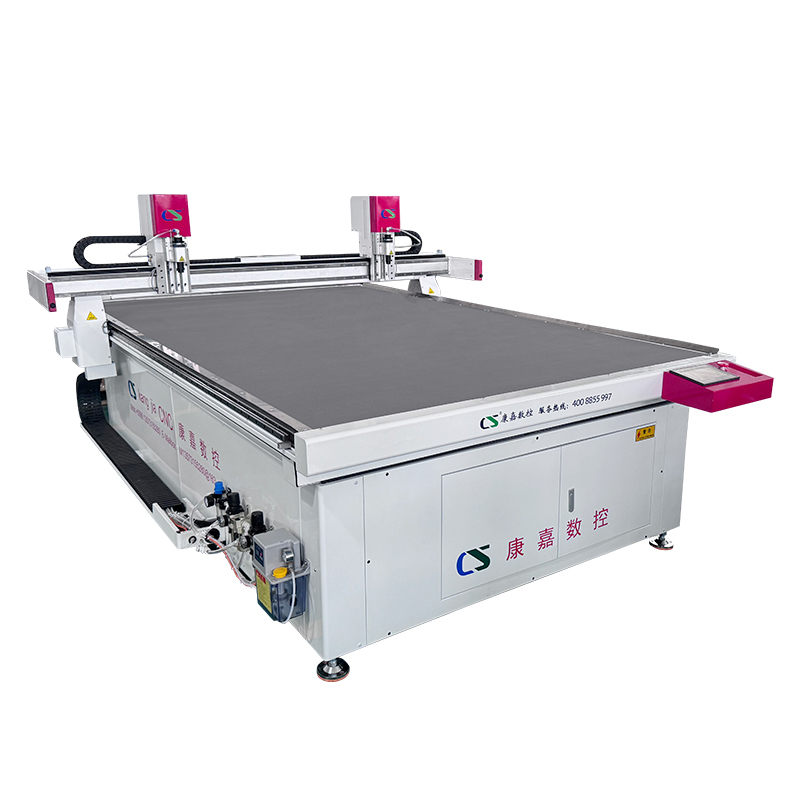
Selecting the cutting mechanism dictates your overall production quality. You must match the physical tool to the chemical material. Oscillating mechanisms move a serrated blade vertically at extreme speeds. Fast abrasive wires run continuously in a single direction. Both methods suit flexible polyurethane (PU) sponges perfectly. They excel at processing memory foams and delicate upholstery materials. These materials cannot tolerate direct heat applications. High temperatures burn flexible foam edges instantly. The burn leaves a hardened, discolored crust. Oscillating blades slice cleanly to preserve the soft, porous nature of the foam.
Hot wire technology serves an entirely different material class. It processes rigid and semi-rigid materials efficiently. Expanded polystyrene (EPS) and extruded polystyrene (XPS) respond perfectly to heat. The hot wire melts the foam smoothly in its path. This specific action creates a sealed, rigid edge. The sealed edge prevents crumbling during transport. It keeps your facility much cleaner by eliminating micro-dust particles.
Standard slicing cannot achieve every geometric shape. Some situations require deep pocketing or intricate 3D contouring. Denser foams demand specialized rotary tools. Expanded polypropylene (EPP) and ethylene-vinyl acetate (EVA) fall into this category. You need standard router bits for these materials. High-speed milling removes material sequentially to create precise cavities. Custom packaging inserts often require these specific pockets. You secure delicate electronic instruments inside them safely.
Use a structured mental model for equipment selection. Match your Sponge Foam Cutting Machine to specific material properties carefully. Evaluate the density (kg/m³) and the firmness of your intended materials before purchasing hardware.
Material Category | Density Range (kg/m³) | Firmness Profile | Recommended Technology |
|---|---|---|---|
Polyurethane (PU) Sponge | 15 - 50 | Highly Flexible / Soft | Oscillating Blade / Fast Wire |
Memory Foam | 40 - 80 | Viscoelastic / Soft | Oscillating Blade |
Expanded Polystyrene (EPS) | 10 - 35 | Rigid / Brittle | Hot Wire |
Ethylene-Vinyl Acetate (EVA) | 30 - 120 | Semi-Rigid / Dense | Router / Milling |
Production bottlenecks hurt delivery schedules during seasonal demand spikes. High-volume operations require aggressive throughput solutions. A CNC Double Head Cutting Machine addresses this exact bottleneck. The system executes symmetrical cuts simultaneously across two separate material zones. You process two nested sheets at once. This configuration handles repetitive batch processing exceptionally well. Mattress manufacturing facilities utilize dual heads to produce twin foam cores rapidly. Packaging insert suppliers double their output without expanding the physical machine footprint. The physical mechanics rely on a highly synchronized gantry system.
Dual-head mechanics introduce advanced operational requirements. They demand stricter daily calibration routines from your staff. Misalignment between the dual cutting heads ruins two material sheets simultaneously. Maintenance teams must verify structural synchronization frequently. These setups also require enhanced vacuum table hold-down capabilities. The cutting force across the table doubles during operation. Material shift becomes a critical operational risk. Upgraded vacuum pumps secure the porous sheets firmly. High-friction conveyor belts also assist overall material stability.
Financial officers demand clear justification for premium equipment. Analyze your daily production volume thoroughly. Single-head units serve low-volume, customized orders efficiently. Dual-head systems demand high-volume, standardized environments. Detail the exact production volume required to reach profitability. The premium for a double-head system justifies the initial capital expenditure quickly under heavy loads. If your batch sizes exceed 500 units daily, the return on investment accelerates rapidly. Your labor costs per unit decrease substantially.
Hardware quality dictates long-term reliability on the factory floor. Evaluate the gantry structure carefully. Heavy welded steel frames absorb operational vibration effectively. Lightweight aluminum frames often flex during rapid directional changes. This flexion causes jagged edges on soft materials. Advise buyers to evaluate motor systems critically. Prioritize servo motors over traditional stepper motors. Stepper motors occasionally lose steps during rapid movements. Servo motors utilize closed-loop feedback systems. They correct positional errors in real-time. This dynamic achieves smooth interpolations on complex architectural curves.
Digital workflow integration requires open-architecture software. Assess the ecosystem provided by the vendor. Can the machine accept standard `.dxf` or `.gcode` files directly? These universal formats integrate seamlessly into existing enterprise design software. Avoid vendors locking users into highly proprietary systems. Closed systems force designers to learn redundant interfaces. Open platforms allow rapid file transfers. You move digital files from the engineering department to the factory floor instantly. This flexibility prevents severe pre-production delays.
Securing soft materials presents a unique physics problem. You cannot use mechanical clamps effectively. Clamps compress the porous edges severely. The cut line deforms immediately upon pressure release. Evaluate the necessity of zoned vacuum tables. They outperform traditional hold-down methods. A highly porous Sponge Cutting Machine requires intelligent airflow management. Zoned tables let operators shut off unused suction areas. This action concentrates maximum airflow directly under the active workpiece.
Industrial equipment poses inherent physical risks to operators. Highlight essential safety features during procurement. Prioritize CE or UL electrical certifications. These marks guarantee strict adherence to global safety standards. Demand optical light curtains around the active cutting perimeter. These invisible barriers stop the machine instantly if an operator breaches the zone. Ensure the system includes redundant emergency stop protocols. Operators must have immediate access to kill switches from multiple angles.
Do not downplay the operational learning gap. Machine installation does not equal instant production efficiency. Operators face a significant learning curve initially. They must master complex digital software interfaces. They need to understand material behaviors under high-speed tension. Recommend allocating specific, uninterrupted timeframes for training. Focus intensely on software programming and routine mechanical maintenance. A poorly trained operator creates substantial material scrap during the first month.
Provide realistic expectations regarding consumable lifespans. Cutting tools degrade continuously during operation. Oscillating blades dull after extensive friction. Fast wires snap under improper tension settings. Hot wires accumulate burnt carbon residue over time. Plan for routine replacements proactively. Acknowledge the required maintenance downtime. Technicians must recalibrate the zero-point after replacing any cutting tool. Keep spare consumables in your local inventory. This prevents unexpected, costly production halts.
Address crucial environmental factors before scheduling machine delivery. Evaluate the required floor footprint thoroughly. You need adequate space for raw material loading and finished part offloading. Ambient temperature controls are vital for processing facilities. Foam expands and contracts based on ambient humidity and heat. Uncontrolled environments ruin precise cut tolerances.
Ensure your facility meets the following readiness criteria:
Install localized exhaust ventilation to capture fine dust or toxic fumes.
Verify stable electrical grounding to protect sensitive servo drivers.
Implement climate control systems to maintain consistent material geometry.
Establish clear logistical pathways for forklift access around the machine perimeter.
Evaluating automated cutting equipment requires a logical, phased approach. We recommend following a structured shortlisting logic to secure the right asset for your facility:
Define your specific material density and firmness ranges accurately.
Select the appropriate cutting technology (blades for soft materials, hot wire for rigid plastics).
Determine your required production volume to choose between single or double-head configurations.
Audit the CAD/CAM software compatibility to ensure seamless factory integration.
Do not rely solely on technical specifications or digital brochures. We recommend decision-makers request custom cut samples directly from the vendor. Send your own proprietary sponge materials to their testing facility. Ask them to process these specific materials. Verify the final edge finish manually. Confirm the actual cycle times. Complete this verification step before signing any purchase order. Real-world testing remains your best defense against procurement mistakes.
A: It typically ranges from ±1mm to ±3mm. This variance is heavily dependent on material porosity, vacuum hold-down efficiency, and the programmed cutting speed.
A: Rarely with high efficiency. While combo-machines exist, they force operational compromises. Dedicated hot wire machines (for EPS) or oscillating blade machines (for PU) offer superior output quality and lower long-term maintenance.
A: Focus heavily on routine consumables like replacement wires and blades. You must also account for vacuum pump maintenance, periodic software updates, and potential material scrap generated during the operator onboarding process.


