Views: 0 Author: Site Editor Publish Time: 2026-11-20 Origin: Site


Commercial leather production faces massive profitability challenges today. Volatile raw material costs heavily impact your bottom line. Inconsistent manual cutting yields waste expensive natural hides. Physical die manufacturing creates persistent workflow bottlenecks. We must rethink how we process genuine leather.
Many factories now transition from traditional clicker presses to digital workflows. Manual cutting limits your scalability severely. Old methods restrict daily flexibility. By adopting advanced digital systems, manufacturers bypass outdated physical constraints. They unlock unprecedented agility on the factory floor.
This article breaks down how modern machinery transforms unit economics. We provide a grounded analysis of digital cutting advantages. You will learn how software and automation overhaul daily production. We also explore the implementation realities production managers must consider before upgrading.
Yield Maximization: Digital nesting and flaw detection typically improve hide utilization by 5% to 15%, directly reducing raw material OpEx.
Tooling Elimination: Removing physical dies accelerates prototyping and enables profitable short-run manufacturing.
Quality Consistency: Oscillating knife technology delivers flawless edge integrity without the thermal damage associated with laser alternatives.
Adoption Reality: Realizing these benefits requires upfront CapEx, CAD software training, and adjustments to floor operations.
Manufacturers know raw leather ranks among their highest expenses. You need to maximize every single square inch. Digital systems excel at material optimization. They remove human guesswork entirely. They protect your profit margins.
Intelligent software analyzes irregular hide perimeters instantly. It fits pattern pieces dynamically across the workable area. The software algorithm outperforms human spatial estimation easily. Manual cutters often leave large gaps between parts. They cannot compute complex geometric combinations quickly. Computers rotate and interlock shapes perfectly. This digital nesting pushes yield rates much higher. You see significantly less scrap in the waste bin. Factories often recover thousands of dollars monthly in saved material. The machine calculates the absolute best layout.
Here are common mistakes to avoid during nesting:
Ignoring grain direction requirements for specific pattern pieces.
Failing to calibrate the software for material stretch properties.
Rushing the nesting algorithm instead of letting it compute optimal layouts.
What to watch out for: Always ensure your patterns have accurate scaling. Incorrect DXF exports will ruin the best nesting efforts. Operators should double-check measurements before executing the cut file.
Natural hides contain scars, insect bites, and uneven grain zones. A CCD leather cutting machine handles this challenge brilliantly. It uses overhead cameras and digital projection systems. The system maps the entire hide surface accurately. It captures every defect clearly in real time. Software then automatically positions premium pattern pieces away from flaws.
Items like shoe vamps or luxury bag fronts land on perfect zones. Hidden parts can utilize lower-quality sections. You get higher quality products automatically. This eliminates manual inspection struggles. Operators simply verify the projected layout. They approve the file and start production.
Bulky physical dies require ample clearance space. You cannot place them right next to each other. The metal edges would collide and dull. Digital blades operate differently. They share cut lines directly. We call this common-line cutting. It requires zero physical clearance space between patterns.
This method drastically reduces material scrap. The blade simply travels down a single shared border. Two pieces separate cleanly. You maximize hide utilization effortlessly. Die presses cannot replicate this efficiency. You capture usable material from tight corners.
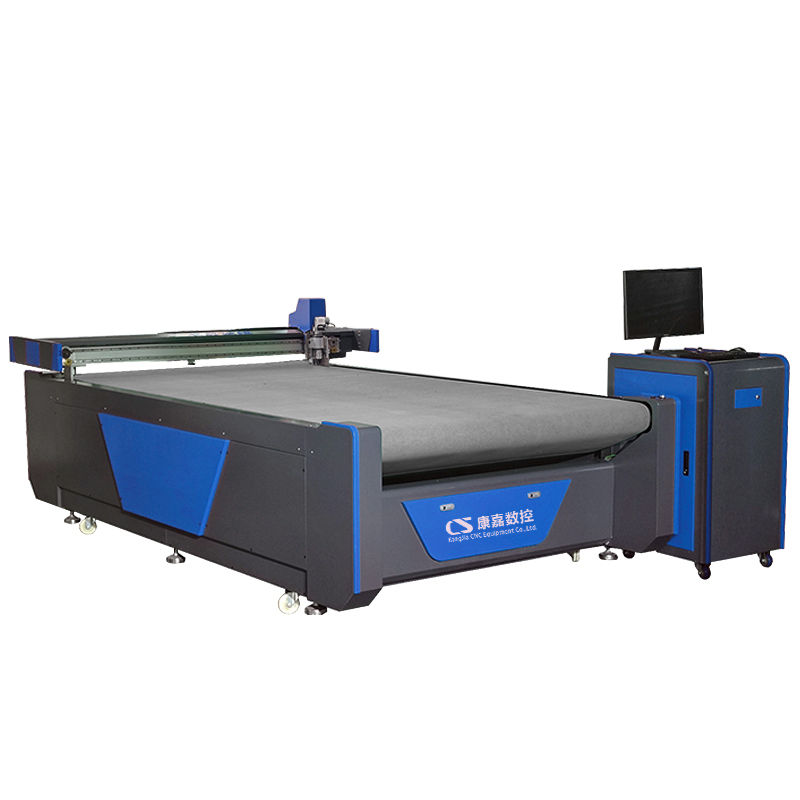
Traditional production moves slowly. Factories wait on physical tools. Upgrading brings incredible workflow agility. It changes how you accept orders.
Custom acrylic or metal dies take weeks to arrive. Die makers charge hefty fees for complex shapes. They stall your production schedule completely. Digital systems change this dynamic entirely. You can cut immediately from a DXF or CAD file. The machine reads the digital file directly. You eliminate tooling delays completely. Your time-to-market shrinks from weeks to hours. You no longer pay for physical storage space. Digital files live on a server safely.
Best practices: Organize your digital library logically. Name your CAD files consistently. This ensures operators can retrieve old designs instantly without searching through disoriented folders.
Brands demand bespoke orders and limited editions today. Immediate design iterations hold immense commercial value. You can execute these requests instantly. You no longer incur sunk tooling costs for short runs. Designers tweak a file on their computer. Operators cut it minutes later on the floor. This speed wins competitive client contracts. You can offer custom sizing easily. You adjust patterns digitally and proceed. Iteration becomes practically free.
Manual positioning slows down press cutting significantly. Operators must move heavy dies by hand repeatedly. A modern CNC leather cutting machine offers continuous feed capabilities. It uses multi-tool heads for extreme speed. The oscillating blade moves rapidly through tough materials. Factories experience vastly superior throughput. Conveyor belts advance the hide automatically. The machine cuts continuously without pausing. Output volume increases dramatically.
Consider these workflow agility benefits:
Designs move from computer to production instantly.
Prototyping happens in hours instead of weeks.
Custom orders become highly profitable.
Machine feed systems reduce idle time between cuts.
Quality control drives repeat business. Inconsistent cuts ruin expensive materials. Digital precision solves these manufacturing headaches.
Human error plagues manual cutting processes. Fatigue causes mistakes late in the shift. Digital cutting ensures perfect left and right symmetry. It holds exacting tolerances on every piece. This accuracy proves critical for complex assemblies.
Footwear and automotive interiors demand absolute precision. Imperfect pieces frustrate sewing operators. Wrinkles form during final assembly. The machine cuts exactly what the CAD file dictates. You achieve uniform quality across thousands of units. Every piece matches the master pattern perfectly. You eliminate downstream assembly issues.
What to watch out for: Dull blades ruin precision quickly. Implement a strict blade replacement schedule. Consistent maintenance guarantees micro-level accuracy remains perfect over time.
Some factories try laser leather cutting equipment. Lasers often damage protein-based genuine leather. They cause burnt edges, hardening, and toxic fumes. CNC oscillating and drag knives offer a better solution. Physical blades prevent thermal damage entirely. You get clean, flawless edge integrity. Sewers can stitch the pieces without prep work. The leather retains its natural flexibility. No burnt odors linger on the final product.
The following chart illustrates how different methods affect material integrity:
Cutting Method | Edge Quality | Thermal Damage Risk | Setup Speed |
|---|---|---|---|
CNC Oscillating Blade | Clean, soft, ready for sewing | None | Instant (from CAD) |
Laser Cutter | Burnt, hardened, requires cleaning | High (toxic fumes) | Instant (from CAD) |
Die Press | Clean but prone to fraying over time | None | Slow (requires physical dies) |
Labor challenges hurt factory output globally. Finding reliable staff remains difficult. Keeping them safe is vital. Automation addresses both issues effectively.
Hiring master manual cutters proves difficult today. Retaining them is even harder. Their physical craftsmanship takes years to develop. CNC technology shifts this skill requirement. Workers now operate software instead of wielding heavy mallets.
Younger workers learn computer controls quickly. They adapt to CAD interfaces naturally. This shift makes scaling your workforce much easier. You no longer depend on a few master craftsmen. You can train new operators in weeks. Your production line stays resilient during staff turnover.
Best practices: Cross-train multiple employees on the software. Never rely on a single machine operator. This protects your production schedule during vacations or sudden absences.
Manual press operation causes repetitive strain injuries. Swinging mallets damages joints over time. Heavy dies crush fingers occasionally. Digital tables use strong vacuum-suction systems. They hold the material securely in place automatically.
Operators keep their hands far away from active cutting zones. Safety sensors stop the machine immediately. The factory becomes a much safer environment. Worker compensation claims often drop significantly. You protect your employees from chronic physical harm.
Upgrading your factory floor requires careful planning. You must evaluate the operational impact realistically. Success demands more than just buying hardware. You need proper integration strategies.
Buyers must acknowledge the initial learning curve. Success relies heavily on CAD and CAM proficiency. You need to integrate the new software carefully. It should communicate smoothly across your existing ERP platforms. Operators need proper training time.
Do not skip vendor training sessions. Strong support helps bridge the knowledge gap. Your team must learn how to nest files efficiently. They must master the machine interface. Expect a brief dip in production speed during onboarding. After a few weeks, productivity will surge.
Machines need appropriate infrastructure to function well. Industrial vacuum pumps require specific power setups. These pumps provide necessary material hold-down force. They also dictate floor noise levels.
You must account for adequate power consumption limits. Three-phase power is often mandatory. Plan your facility layout accordingly. Keep the pumps in sound-dampened enclosures if possible. Ensure clear pathways for loading large hides. Good network connectivity is also crucial. The machine needs reliable access to your design servers.
Do not buy machinery blind. Demand rigorous proof-of-concept testing. Use your own specific leather grades. Bring your exact pattern files to the demo. Watch the machine handle your toughest materials.
This testing prevents expensive purchasing mistakes. Compare different vendor results carefully. Check how their cameras handle low-contrast flaws. Verify the blade speed on thick vegetable-tanned leather. Ask operators about their daily maintenance routines. A hands-on demo reveals true operational capability.
Upgrading to a digital leather cutting machine changes your business fundamentally. It is not just about raw speed. This equipment serves as a vital material-saving investment. It enables true agility on the factory floor. You eliminate tooling delays completely. You maximize yield from every expensive hide.
Production leaders should take immediate action. Audit your current monthly scrap rates today. Calculate your average die-creation costs over the last year. Use these figures to establish a clear baseline. This accurate data justifies your future equipment investments properly. You can then confidently modernize your production floor.
A: It varies by production volume. It typically ranges from 12 to 24 months. This timeline is driven primarily by raw material savings. You can expect a 5% to 15% yield increase. Reduced labor hours also contribute heavily to this return. You eliminate expensive tooling costs completely.
A: Yes, but it requires the correct tooling setup. Buyers must ensure the machine features interchangeable modules. You need heavy-duty pneumatic oscillating tools for thick harness leather. You also need drag or wheel knives for supple lambskin. Proper tools prevent material tearing.
A: A standard CNC cuts blindly based on CAD coordinates. A CCD system adds high-definition cameras and projection software. It can "see" the irregular shape of genuine leather. It recognizes pre-marked defects easily. This vision system enables truly smart nesting.
A: Generally, no. Lasers are fast and require no blade replacements. However, they burn genuine leather. This creates rigid edges, soot, and toxic fumes. Oscillating blades provide clean, assembly-ready edges. They never cause thermal damage to natural hides.


